Rūta Kačkutė on History and Netflix: “Better horned Vikings—though they never had horns—than no Vikings at all”
2025 03 25
The Vikings are one of the most romanticized and mythologized historical communities. Films, TV series, and games have, over decades, shaped an impressive—though not always accurate—image of them. Did Vikings really wear horned helmets, were their bodies covered in tattoos, and did they truly drink from their enemies’ skulls?
We speak with Dr. Rūta Kačkutė, Director General of the National Museum of Lithuania, about the stereotypes shaped by popular culture, their impact on how we perceive history, and what historical sources and archaeological research actually tell us about the Vikings.
-

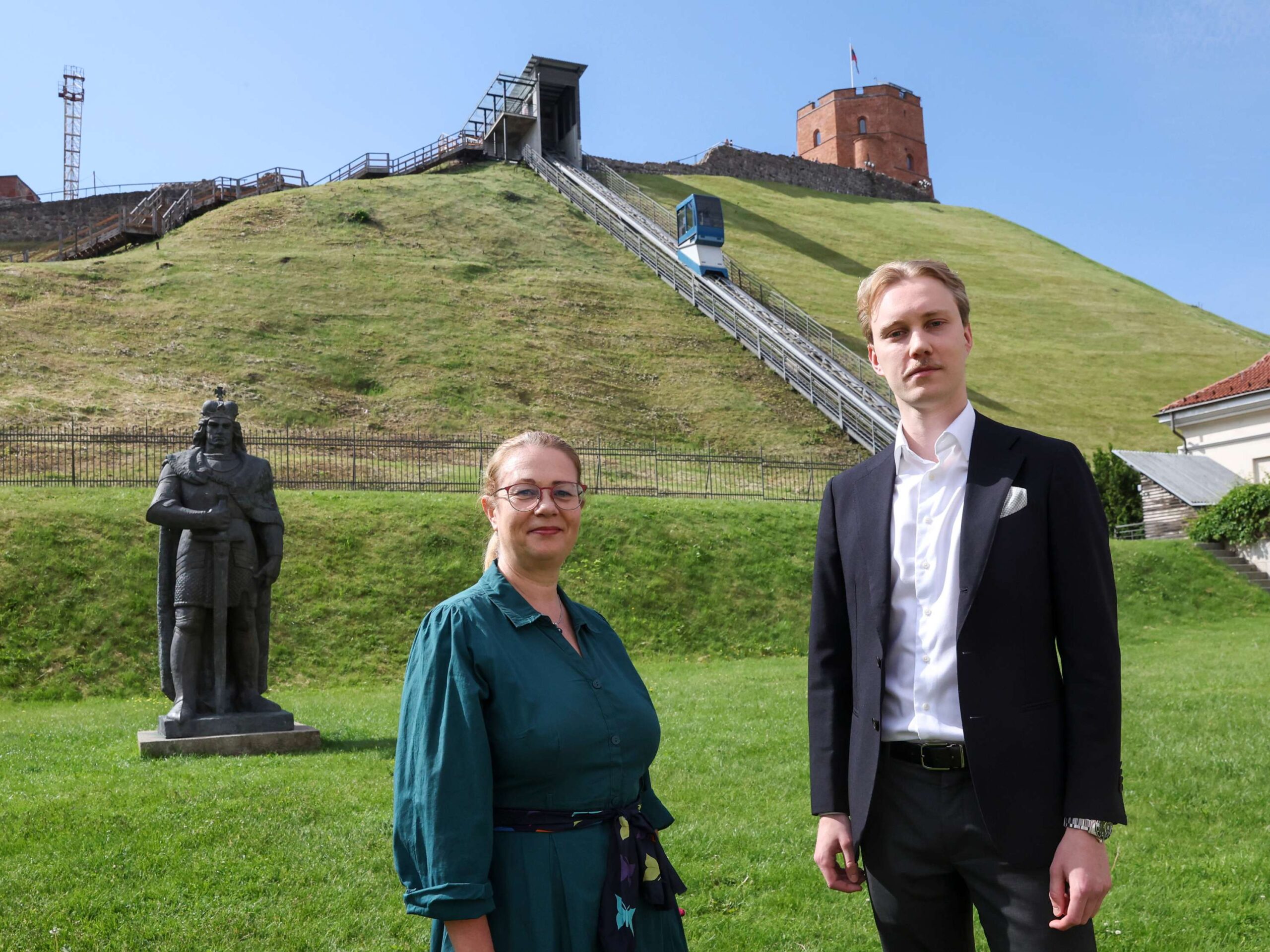
- Director General of the National Museum of Lithuania, Rūta Kačkutė. Photo by Augustinas Bėkšta, LNM

Popular culture often plays a major role in shaping our understanding of history, though it tends to embellish it. How do you view the balance between scholarly knowledge and its popularization in the entertainment industry?
Popular culture inevitably follows its own rules—it seeks impact and emotion, which sometimes means history is presented with certain exaggerations. Scientists, however, cannot afford such liberties—we rely on evidence and leave as little room for speculation as possible. The international exhibition Kyivan Rus. The Beginning, which I co-curated with Eglė Zaveckienė, reveals many fascinating facts about the Vikings, who played a significant role in the formation of this early state.
Still, if I had to choose between people knowing about Vikings—but picturing them with horned helmets they never actually wore—or knowing nothing at all, I’d go with the first option. In today’s visual culture, if no films are made about you, you remain unknown to wider audiences. Even with embellishments, it is an opportunity to speak about the real history. Ignorance opens the door to manipulation, which we’ve seen time and again when it comes to the history of Eastern Europe. For instance, we often see Vikings on screen, but we don’t see Kyivan Rus, which was closely connected to them. Perhaps if this image were more prominent, our perspective on certain things today would also be different.
VIKINGS OR SCANDINAVIANS?
Let’s start with a basic question—who exactly were the Vikings? How do historians define the term?
This is an important distinction, because in films the term “Vikings” is often used to describe all Scandinavian communities living in the North during that time, without differentiating between Danes, Swedes, and Norwegians. In fact, the people we now call Vikings never referred to themselves this way—the term is a modern invention, later applied much more broadly.
Historically, going Viking was a way of life, an occupation. The term “Viking” referred to individuals who set out on long sea voyages—trading, raiding, founding settlements, and collecting tribute from distant lands. Why this lifestyle? Because most people living in Scandinavia at the time were farmers, but arable land was scarce. As a result, some had to seek other means of livelihood.
In written sources, the word “Viking” is used to describe someone engaged in vikinging. This is precisely captured in the phrase: “he went off to go Viking.”
-

- The Vikings are one of the most romanticized and mythologized historical communities. Photo by Silvestras Samsonas, LNM

Did the Balts Belong to the Viking World Too?
Absolutely—there is evidence that the Curonians (a Baltic tribe) also engaged in vikinging: they traveled, sailed, and fought. While no intact ships have been discovered, we have found ship rivets, and written sources speak of their activity. For instance, there is a tale of Vidgaudas from Sambia fleeing to the Danish king for protection from the Curonians who were chasing him across the Baltic Sea. A Danish oral tradition even preserved the saying: “God save us from the Curonians.”
It’s also likely that the Balts participated in trade. Archaeological finds such as scales and swords support this, especially in the region around the Daugava River, which was part of trade routes reaching Arab lands.
Beards, Tattoos, and Horns
Helmets with horns, tattooed bodies, rugged beards—how accurate are these portrayals of Vikings in film?
What bothers me the most is the image of a Viking wearing a horned helmet. This depiction has no historical basis and originated in the 19th century with the romanticized operas of Wagner, where Vikings were shown this way. It may be a visually powerful image, but it’s incorrect. Archaeologists have found several authentic Viking helmets—none of them had horns.
Where did this image come from then?
Most likely from much older Germanic cultures of the Bronze Age—about 2,000 years before the Viking era. In artifacts from that period, some horned helmets were discovered, but these were decorative, ceremonial pieces—not used in battle as films like to portray.
Still, some elements in film are accurate. For example, the feature on helmets that protected the brow and nose bone. Our exhibition Kyivan Rus. The Beginning, on display at the House of Histories, includes such a beautifully decorated helmet. It’s a rare item, as these components often broke off or were lost—so we’re happy that some films have portrayed these elements correctly.
What About the Tattooed Vikings?
Films often show Vikings covered in tattoos from head to toe, but there’s no strong historical or scientific evidence for that. Some body markings may have existed—they are mentioned in Arabic sources—but more as drawings or decorations. These were not necessarily tattoos. And since organic material degrades over time, it’s extremely rare to find preserved Viking skin that could confirm this. Even among the few mummified remains found, there’s no clear proof of tattoos.
What might such body decoration have signified—beauty, status, power?
It could have signaled group belonging, much like the practice of tooth filing. One skull in our Kyivan Rus exhibition clearly shows filed teeth. This practice was found particularly on the island of Gotland—a major Baltic Sea trade center—where certain individuals marked their Viking affiliation by filing the front teeth and rubbing them with black resin. While only the surface of the tooth was filed, the procedure was painful.
Since many different cultures met in such trading hubs, and not all shared a common language, physical appearance—like filed teeth or decorated skin—may have served as a kind of identity marker, like a modern-day name tag. It may also have been intended to intimidate.
Were Vikings Really Tall, Blond Giants?
It’s true that Scandinavians tend to have fair skin and hair. But not all Scandinavians were Vikings—and not all Vikings were Scandinavian. The Viking world was vast and diverse. Vikings could have had dark hair too. From excavated Viking graves, we also know that their height was not particularly impressive.
Still, there were beauty standards. It’s believed that darker-haired Vikings—who didn’t fit the “Nordic” ideal—may have bleached their hair using a strong soap lye. This not only lightened hair and beards but also helped with hygiene.
Did Vikings Care About Hygiene?
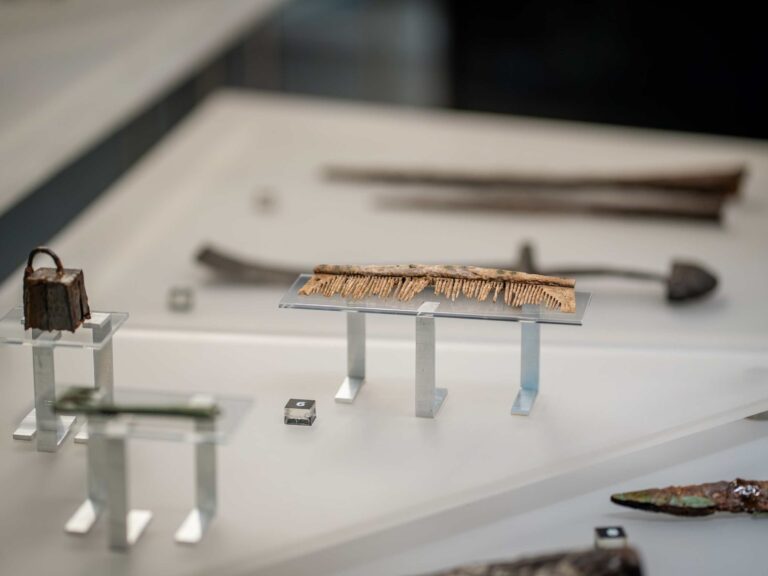
Very much so. The soap lye used to bleach hair also helped prevent lice. Viking graves often contain combs, razors, tweezers, needles, and even earwax picks. In this respect, they were quite similar to the Romans—deeply concerned with cleanliness.
-
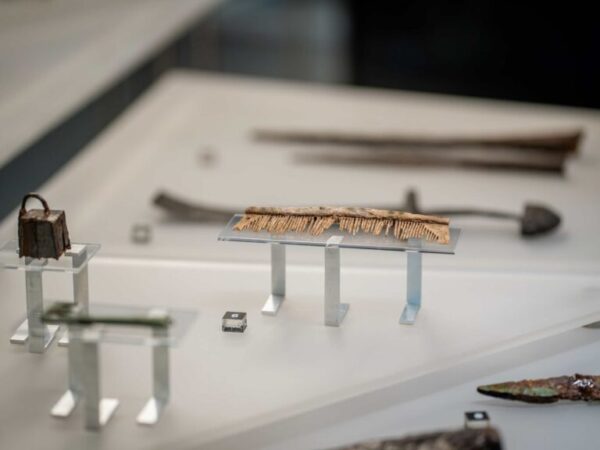
- Hygiene items on display challenge the popular image of long-bearded Vikings. Photo by Silvestras Samsonas, LNM
Viking Beards – Groomed or Grown?
The notion of long Viking beards is also debatable. Their attention to hygiene, as I mentioned earlier, doesn’t quite align with the long, unruly beards often seen in films. It’s likely their beards were much shorter. After all, if they had truly worn such long beards, there would’ve been no need for razors—yet nearly every Viking carried one. Long facial hair would have made hygiene much more difficult.
Uncivilized Savages?
How would you characterize the Vikings—or Scandinavians more broadly? Are they deserving of the “uncivilized” image so often applied to them?
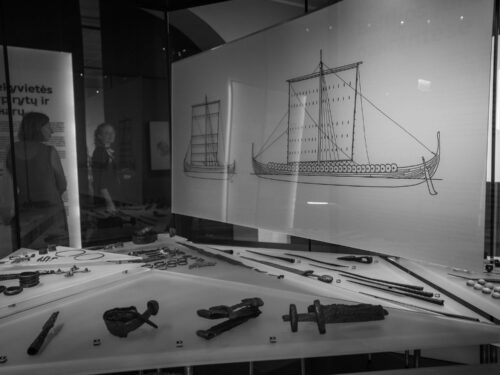
It depends on how we define “civilized.” Their civilization was different from others flourishing at the time, but they were by no means savages. They simply lived differently. Technologically, the Scandinavians were very advanced—they built unique, sophisticated ships. True, the Romans also built ships, and earlier, but we’re talking about northern communities developing in relative isolation. Their ships were a technological innovation of their own. The Viking ships were designed to sail in very shallow waters, allowing them to approach shorelines closely. That’s remarkable—neighboring societies couldn’t do that. Their use of sails enabled high speeds.
What Do We Know About the Viking World Beyond Warfare?And what about their buildings, crafts, and daily life?
The image of northern peoples as mere raiders is challenged by a broader look at their society. The Scandinavian communities from which most Vikings emerged had a rich and complex social structure. They developed a sophisticated belief system, had their own writing, and maintained well-organized communities. They held assemblies of free men, appointed chieftains, and even had an aristocracy and elite class. They also managed vast trade routes stretching from Scandinavia to the Arab world—this required not only navigational skill, but also social and economic organization.
Their buildings, though wooden, were large and complex—especially the so-called longhouses, which were impressively built and often beautifully decorated. As for craftsmanship, Viking jewelry was of particularly high quality. They used refined techniques such as filigree, and their ornamentation was authentic and artistically rich.
-

- The Vikings controlled trade routes stretching for thousands of kilometers. Photo by Silvestras Samsonas, LNM

-
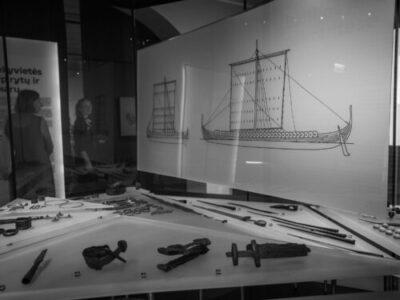
- The Scandinavians were skilled in building unique and sophisticated ships. Photo by Silvestras Samsonas, LNM
What About the Commonly Emphasized Brutality?
It was probably no greater than elsewhere. In fact, this image likely stems from a translation error. A common myth claims that Vikings drank from the skulls of their slain enemies. This is false. In Danish, the words for skull and cup differ by only one letter. Some early translators misinterpreted this term, giving rise to the mistaken image of Vikings drinking from human skulls.
Did Viking Women Enjoy Greater Rights?
Many films and series focus on warrior women, rather than highlighting their rights and social roles. To be fair, the series Vikings did touch on themes such as land ownership and leadership roles. In reality, women in Viking society had a unique status compared to other parts of Europe at the time.
For example, women retained ownership of their dowry after marriage. If they divorced—yes, divorce was possible—they returned to their family with their dowry. When husbands were away, wives managed the household, slaves, servants, and working relatives. We know that women joined men on long journeys and relocated to settle new territories. Upon their husband’s death, a woman could even present her own case at the assembly (thing).
A Culture of Strength and Death?
Was physical power the ultimate Viking value?
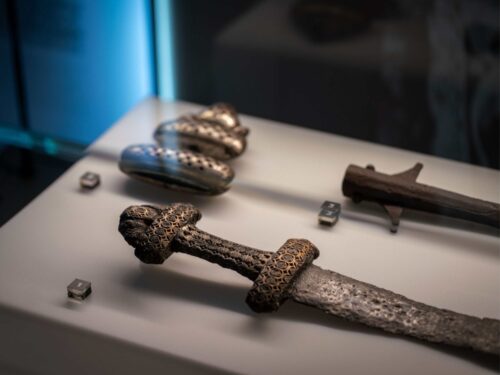
In reality, only a small portion of Scandinavians could afford swords, which were extremely expensive and exclusive weapons—reserved for the elite. Ordinary people relied on spears and axes, the most common arms of the time.
Physical strength wasn’t the only, or even the most important, value. Norse sagas devote significant attention to beliefs and spirituality. An honorable death in battle was admired, as it promised entry into Valhalla. A natural death was seen as less noble—not due to a “cult of violence,” but because of faith in the afterlife. Violent death wasn’t considered shameful.
They had many gods, and only a few were associated with strength. This shows that other values were equally or more important. Diplomatic skill—such as the ability to negotiate, trade, or convince other tribes to pay tribute—was likely more vital than brute force. Popular culture tends to overemphasize physical might, overlooking the Vikings’ negotiation skills.
Viking Burial Practices: Myth and Reality
Popular culture often shows a dramatic scene: a Viking laid in a boat, set adrift and ignited with flaming arrows. But archaeological evidence tells a different story. Most Viking burials occurred on land—boats were buried along with treasures and grave goods. Not all were burned; if cremation took place, it happened onshore.
It’s important to understand that ships were not only symbolic but also immensely valuable. Weaving a sail alone could take three years of continuous work. Finding ships buried with the dead reflects the enormous value and meaning of these rituals—it was believed these items would be needed in the afterlife.
How Do You See the Role of Popular Culture in Raising Interest in History?
Series like Vikings spark curiosity. For some, that curiosity ends with watching all the episodes. For others, it leads them to seek historical books or scholarly articles to find out what was real and what was fiction. So I say: better horned Vikings—though they never had horns—than no Vikings at all. If such imagery encourages even a few people to explore further, that’s already a great gain.
This interview is part of the international exhibition Kyivan Rus. The Beginning, curated by the National Museum of Lithuania. It is on view at the House of Histories (T. Kosciuškos St. 3, Vilnius) until March 30, 2025—this week is the last chance for visitors to see it. The exhibition is held under the patronage of the President of the Republic of Lithuania, Gitanas Nausėda.
Interview by Živilė Stadalytė (National Museum of Lithuania).
-

- The exhibition Kyivan Rus. The Beginning features a Viking skull with filed teeth. Photo by Silvestras Samsonas, LNM

-
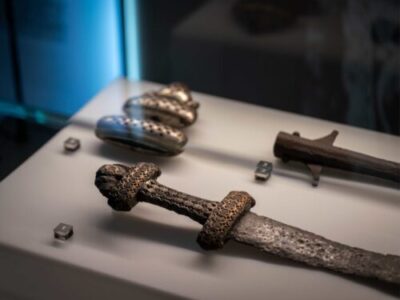
- Only a small part of society could afford to be armed with swords. Photo by Silvestras Samsonas, LNM