Unfamiliar Neighbourhood: Baltic and Kiyavan Rus’ Ties in an International Exhibition
2025 01 28
The international exhibition Kyivan Rus’. The Beginning, hosted at the House of Histories by the National Museum of Lithuania, not only unveils the history of this medieval state but also invites visitors to explore the shared past of the Baltic region and Kievan Rus’. Among the highlights are previously unexhibited finds from the Baltic Ostriv burial site. This discovery has revealed that Baltic tribes had much closer connections with Kievan Rus’ than previously believed. The exhibition also offers insight into how these neighbouring ties influenced the history of the Grand Duchy of Lithuania.
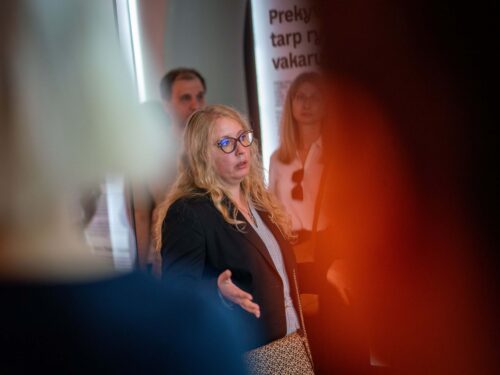
One of the exhibition’s curators, Director General of the National Museum of Lithuania, Dr. Rūta Kačkutė, explains that the exhibition encourages a new understanding of ourselves by presenting the historical processes of neighbouring peoples and how they have shaped our own story: “Without understanding the history of our neighbours—whether to the north or east—we cannot fully comprehend our own. The Baltic tribes were not isolated: their connections with Kievan Rus’ helped shape the broader history of the region. From the 13th century onwards, the lands of the fallen Kievan Rus’ gradually became part of the Grand Duchy of Lithuania. Some of these stories are new even to scholars, while others simply need to be told more often and more loudly.”
A Baltic Burial Site by the Ros River
Like their Germanic, Slavic, and Finnic counterparts, the Balts took part in Viking-like expeditions and contributed to the formation of Kievan Rus’, although not as actively as the Scandinavian Germans. While it may be difficult to imagine that Baltic–Kievan Rus’ relations were limited to underdeveloped trade, the historical sources documenting these ties have so far been sparse. This perception may be transformed by the 2017 discovery of a Baltic burial site near the Ros River, about 100 kilometres from Kyiv.
This relatively recent and still little-known finding in Lithuania represents a major scholarly breakthrough. The exhibition marks the first time that artefacts from this burial site are on display, offering a fresh perspective on the image of Baltic tribes.
“Historiography has long held the image of Baltic tribes as sedentary and insular, interacting with the outside world mainly through trade or occasional military conflict. Some tribes were attacked and forced to pay tribute, as recorded in written sources. The discovered burial site may become a key to further research into Baltic and neighbouring relations and provide deeper insight into the regional dynamics of the 9th–12th centuries. It also helps us understand how deeply involved the Baltic tribes were in these processes,” says archaeologist Eglė Zaveckienė, one of the exhibition’s curators. She also points out that a birch bark message found in Novgorod, dated to the end of the 11th century, mentions Lithuania marching to war in Karelia—demonstrating the Balts’ ability to traverse significant distances.
-
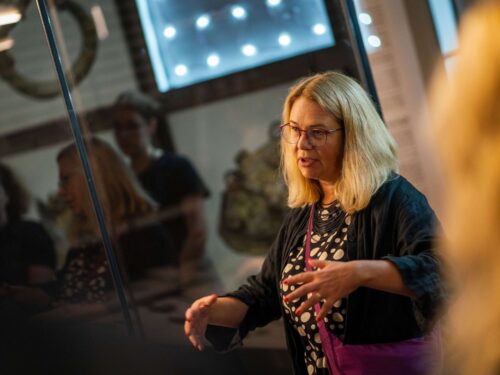
- Dr. Rūta Kačkutė, Director General of LNM and curator of the exhibition. Photo by S. Samsonas, LNM
-
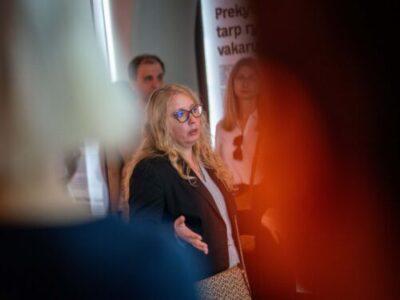
- **Eglė Zaveckienė, archaeologist and curator of the exhibition. Photo by S. Samsonas, LNM.
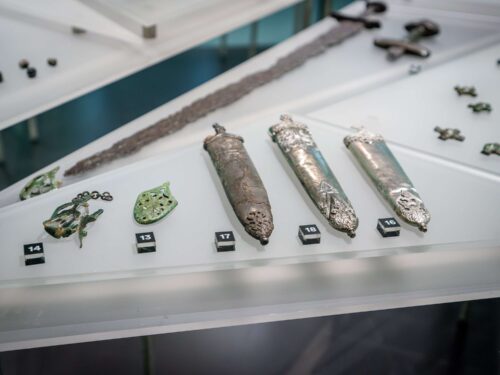
The way people were buried at the Ostriv cemetery surprised archaeologists from the start. It was unusual for Kievan Rus’ – the orientation of the graves was different. The items found in the graves also looked similar to those used by Western Baltic tribes such as the Skalvians, Yotvingians, Prussians, and Curonians. This helped researchers come closer to the idea that the cemetery was used by Balts.
According to Rūta Kačkutė, scientific studies showed that the DNA of the people buried there is similar to that of Balts, Finno-Ugric groups, and Scandinavians. The cemetery dates to the 11th century. At that time, Western Balts usually cremated their dead, but all the burials in Ostriv are inhumations. In some graves, remains of coffins were found. This might be because, in Christian Kievan Rus’, newcomers were not allowed to carry out pagan funeral rites. There is also reason to believe that Western Balts moved here with their whole families. Graves of women and children were found in the cemetery. It seems that this migrant community was quite young and had difficulty adapting to local conditions.
Baltic Warriors in the Service of Kievan Rus’ Princes?
Finds from the Ostriv cemetery show that Baltic tribes were involved in the life of Kievan Rus’ in deeper and more meaningful ways than previously thought.
The Ros River was an important part of the southern defense line in Kievan Rus’. In the 10th and 11th centuries, the southern borders needed protection from nomadic attacks. Since this area was about 100 kilometers south of Kyiv, a line of hillforts and long defensive earthworks was built along the river.
According to archaeologist Eglė Zaveckienė, the discoveries at Ostriv show that this defensive zone was home to people of many different backgrounds: Scandinavians, captured Poles, nomads who joined the Kievan prince’s army, and members of Western Baltic tribes.
She explains that this points not only to trade links but also to direct involvement of Balts in the life of Kievan Rus’:
“It’s very possible that Balts were seen as good warriors and were hired for military service. But it’s also possible that they ended up in the south of Kievan Rus’ as war captives or people forced to pay tribute. Written sources mention military campaigns by princes Vladimir and Yaroslav against the Yotvingians and Lithuanians.”
-
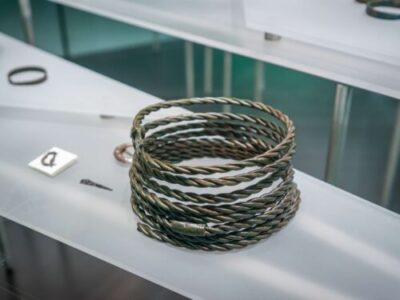
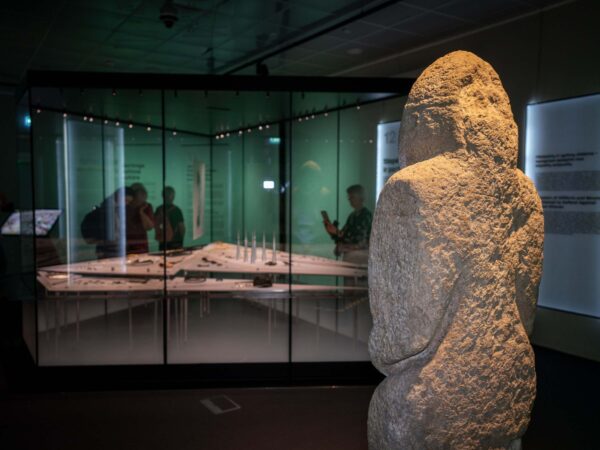
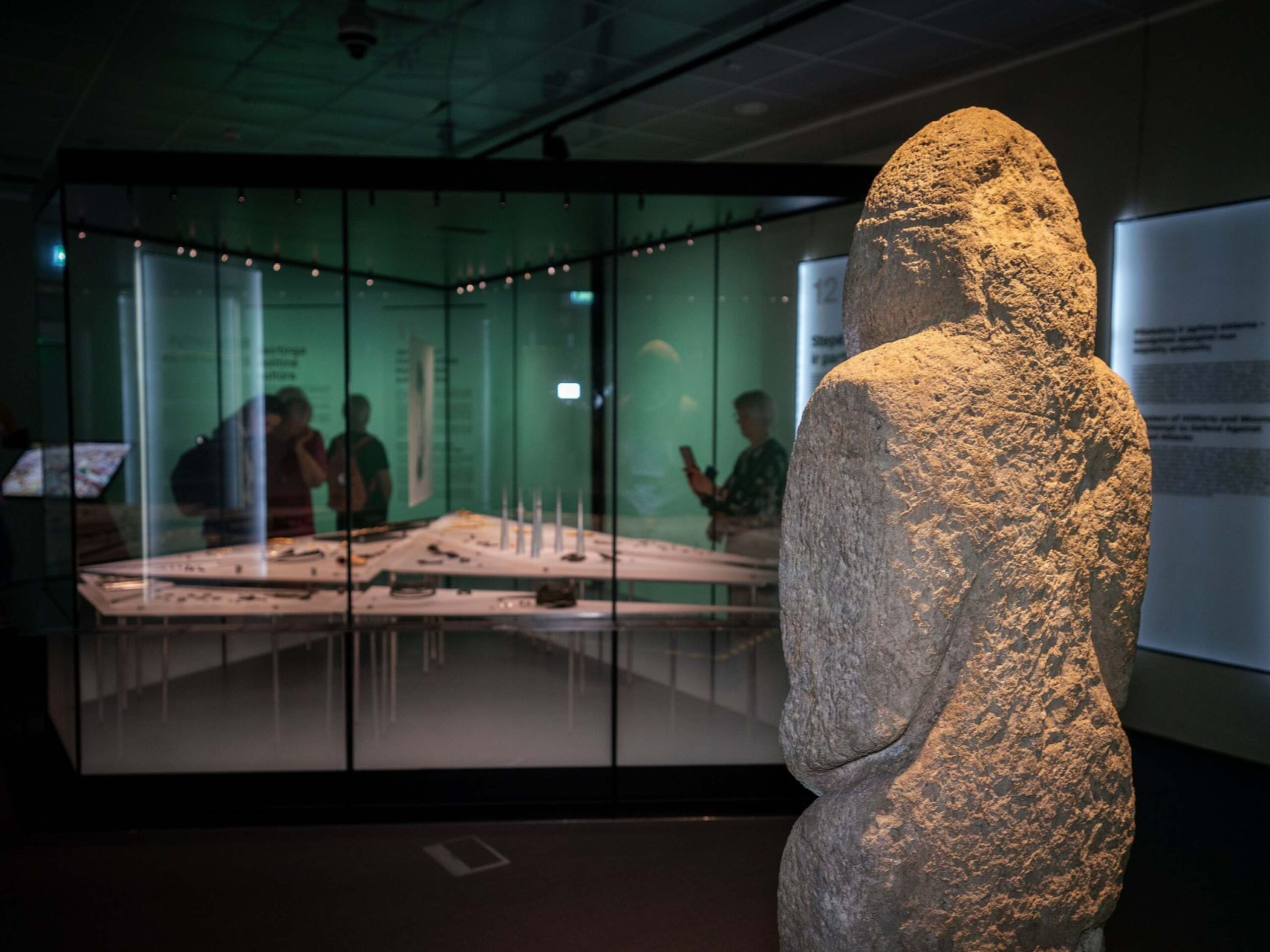
- The exhibits of the international exhibition Kievan Rus’. The Beginning illustrate the connection between the Balts and Kievan Rus’. Photo by S. Samsonas, LNM.
-
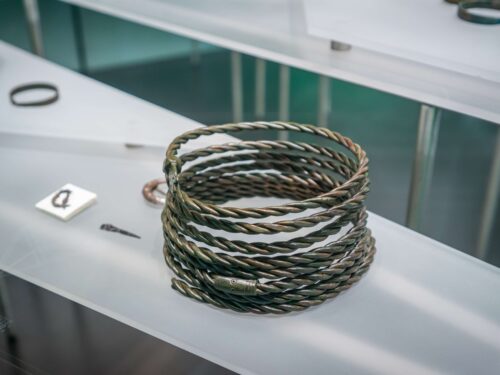
- The exhibits of the international exhibition Kievan Rus’. The Beginning illustrate the connection between the Balts and Kievan Rus’. Photo by S. Samsonas, LNM
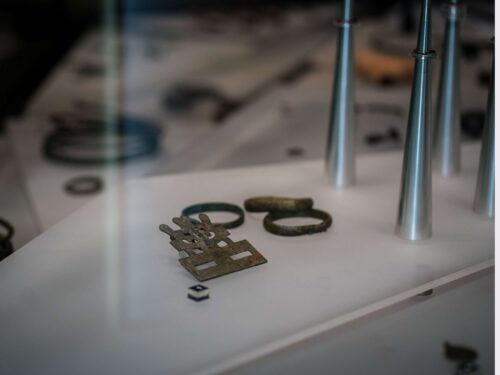
Nomadic Elements Adopted by the Balts
This discovery may encourage researchers to take a fresh look at the materials stored in Lithuanian museums and to reinterpret them. It could help explain how nomadic-style items—such as bits, bridle fittings, and stirrups—appeared in the horse equipment of Baltic tribes in the 10th–12th centuries.
“More evidence should be sought in our own archaeological collections, because some groups of Late Iron Age finds have not been well studied. The Balts had no direct contact with steppe nomads, so how did nomadic-style elements end up in graves of Prussian tribes or those living in present-day Lithuania? That suggests some kind of contact. Either they came to us, or we went to them. Now that we have the finds from the Ostriv cemetery, it’s possible to link these two ideas and assume that we went to them. Perhaps these cultural influences came through connections with Kievan Rus’. But to prove or disprove these ideas, we need thorough analysis of the materials we already have,” says Eglė Zaveckienė.
These discoveries not only enrich our knowledge about Baltic tribes but also open discussions about their role on the borders of Kievan Rus’.
Kyijavan Rus’ Influence on the Grand Duchy of Lithuania
The exhibition also explores the collapse of Kievan Rus’ and how some of its traditions continued within the Grand Duchy of Lithuania.
In the early 13th century, a new and powerful force—the Mongols—emerged from the steppes. The fragmented Kievan Rus’ was unable to resist their attacks and, after the Mongol campaigns of 1236–1240, became part of the Golden Horde.
The pagan Grand Duchy of Lithuania, rising in the 13th century, took advantage of this situation. It expanded into some of the former lands of Kievan Rus’ and inherited parts of its cultural legacy. This influence is most visible in laws and crafts: some Rus’ artisans fled the Mongol invasions or were invited by Lithuanian rulers to settle in their lands.
The exhibition showcases this cultural influence through artefacts from Kernavė and Vilnius, and stunning silver necklaces from Gėliogaliai, Kretinga, Stakliškės, and Kulautuva.
-
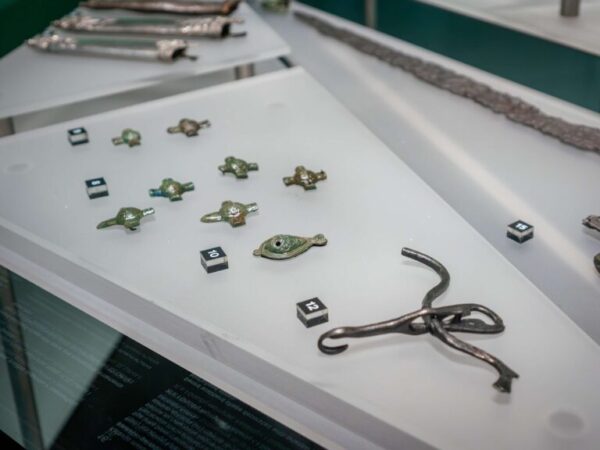
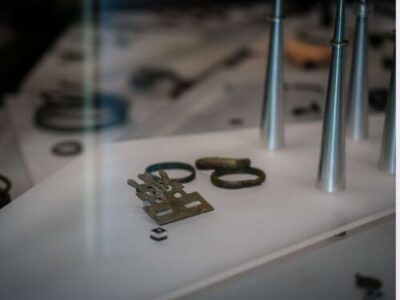
- The international exhibition Kievan Rus’. The Beginning showcases the historical ties between the Balts and Kievan Rus’. Photo: S. Samsonas, LNM
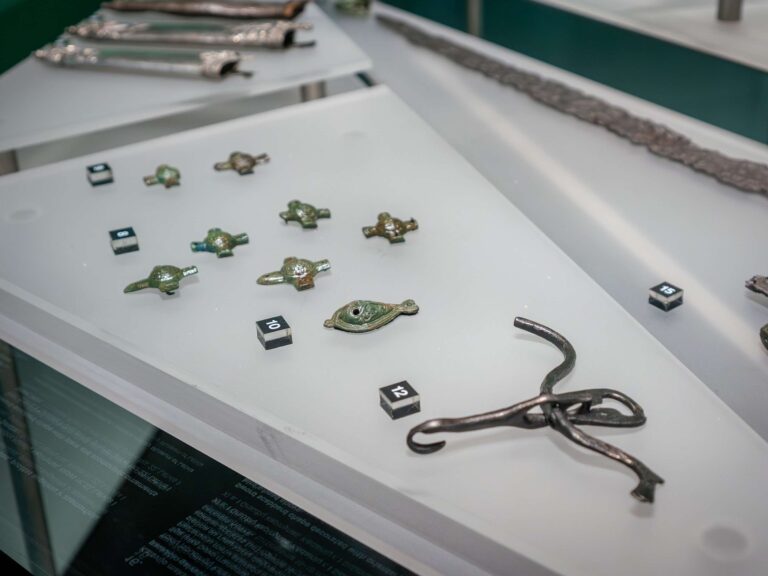
Craftsmen and Merchants from Ruthenian Lands in the Grand Duchy of Lithuania
“Craftsmen and merchants from Ruthenian lands settled in the main centers of the Grand Duchy of Lithuania—Kernavė and Vilnius. Kernavė was one of the most important political, trade, and craft centers of the state at that time. Finds there include light clay pottery with yellow glaze, glass bracelets, and pink slate spindle whorls that came from the cities of Kievan Rus’. In the mid-13th century, the Grand Duchy of Lithuania annexed the lands of Hrodna and Navahrudak, from which jewelers may have come to Kernavė, bringing with them deep traditions of Kievan Rus’ craftsmanship,” says Rūta Kačkutė.
In the 14th–15th centuries, rulers of the Gediminid dynasty expanded into vast Ruthenian territories, including Kyiv. They took Orthodox princesses as wives, and the Ruthenian language became one of the main languages used in the Grand Duke’s chancery.
Curator Rūta Kačkutė also notes that many noble families who were active in Lithuania’s political and cultural life came from Ruthenian lands—such as the Sapiehas, Chodkiewiczs, Ostrogs, and Tyszkiewiczs:
“Today we rarely think about the origins of these families, but for example, the Oginskis—whom we see as very much our own—descended from the Rurikid dynasty.”
One Euro from Every Ticket Goes to Ukraine
The National Museum of Lithuania reminds visitors that each person attending the exhibition contributes to a meaningful initiative: one euro from every ticket sold is donated to Ukrainian museums that lent exhibits for the show. These institutions include the National Museum of the History of Ukraine, the Institute of Archaeology of the National Academy of Sciences of Ukraine, the Lviv Historical Museum, and the Zaporizhzhia Regional Museum of Local Lore. This initiative highlights the importance of supporting Ukraine’s cultural institutions during this difficult time.
The international exhibition Kievan Rus’. The Beginning will run until March 30, 2025, at the House of Histories, T. Kosciuškos g. 3, Vilnius. The exhibition is held under the patronage of the President of the Republic of Lithuania, Gitanas Nausėda.
-
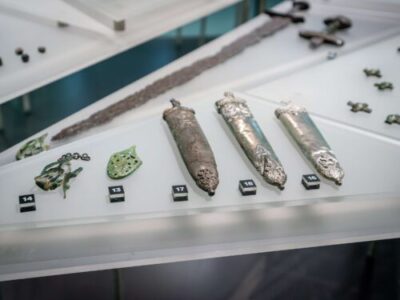
- The exhibits of the international exhibition Kievan Rus’. The Beginning reveal the connection between the Balts and Kievan Rus’. Photo by S. Samsonas, LNM.
-
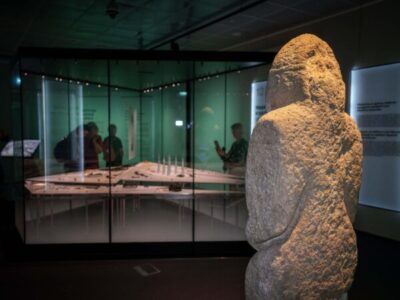
- Exhibits from the international exhibition Kievan Rus’. The Beginning highlight the connections between the Balts and Kievan Rus’. Photo by S. Samsonas, LNM