Symbols of the Baltic States’ Power Grid Synchronization – at the National Museum of Lithuania
2025 03 10
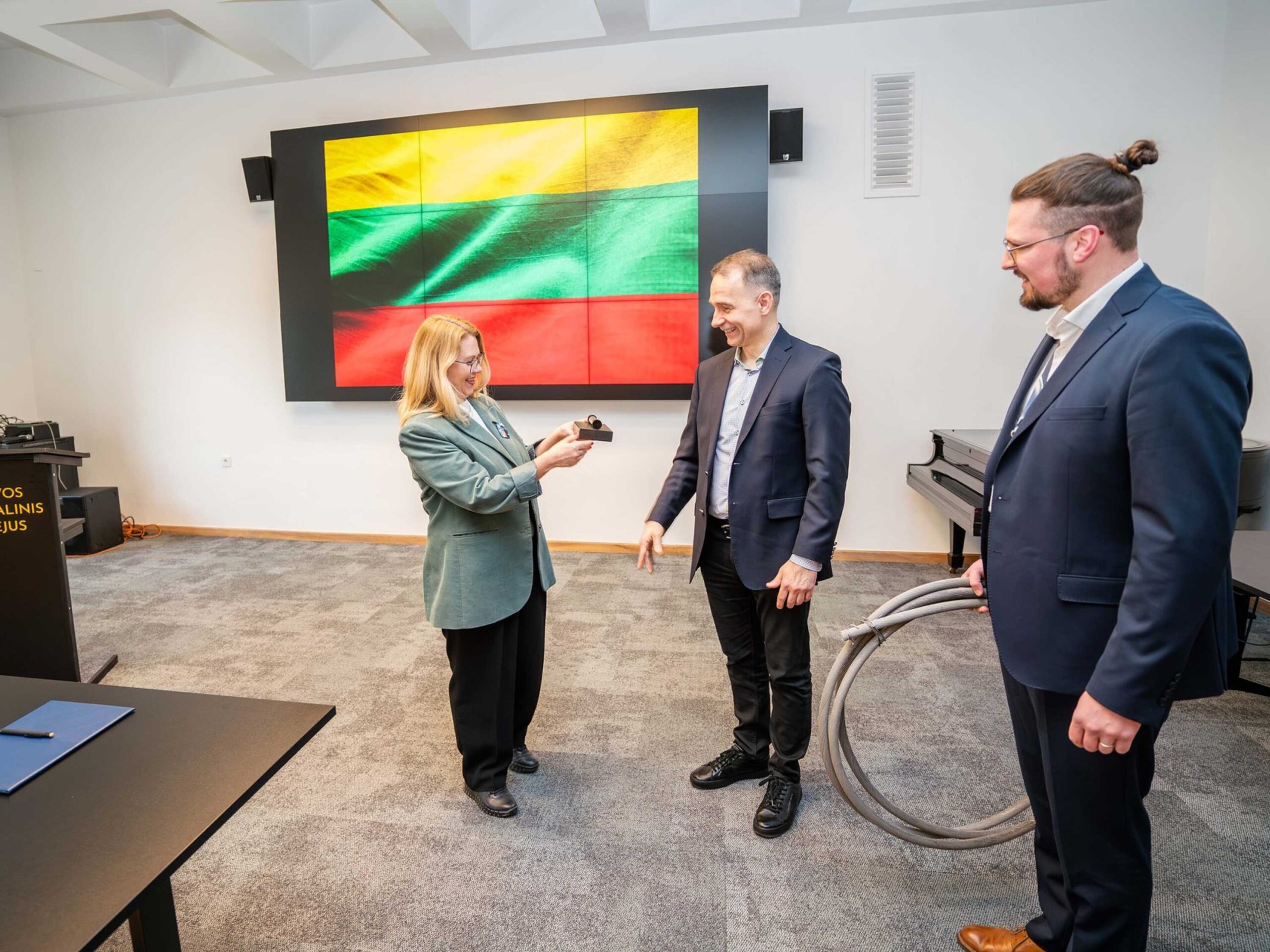
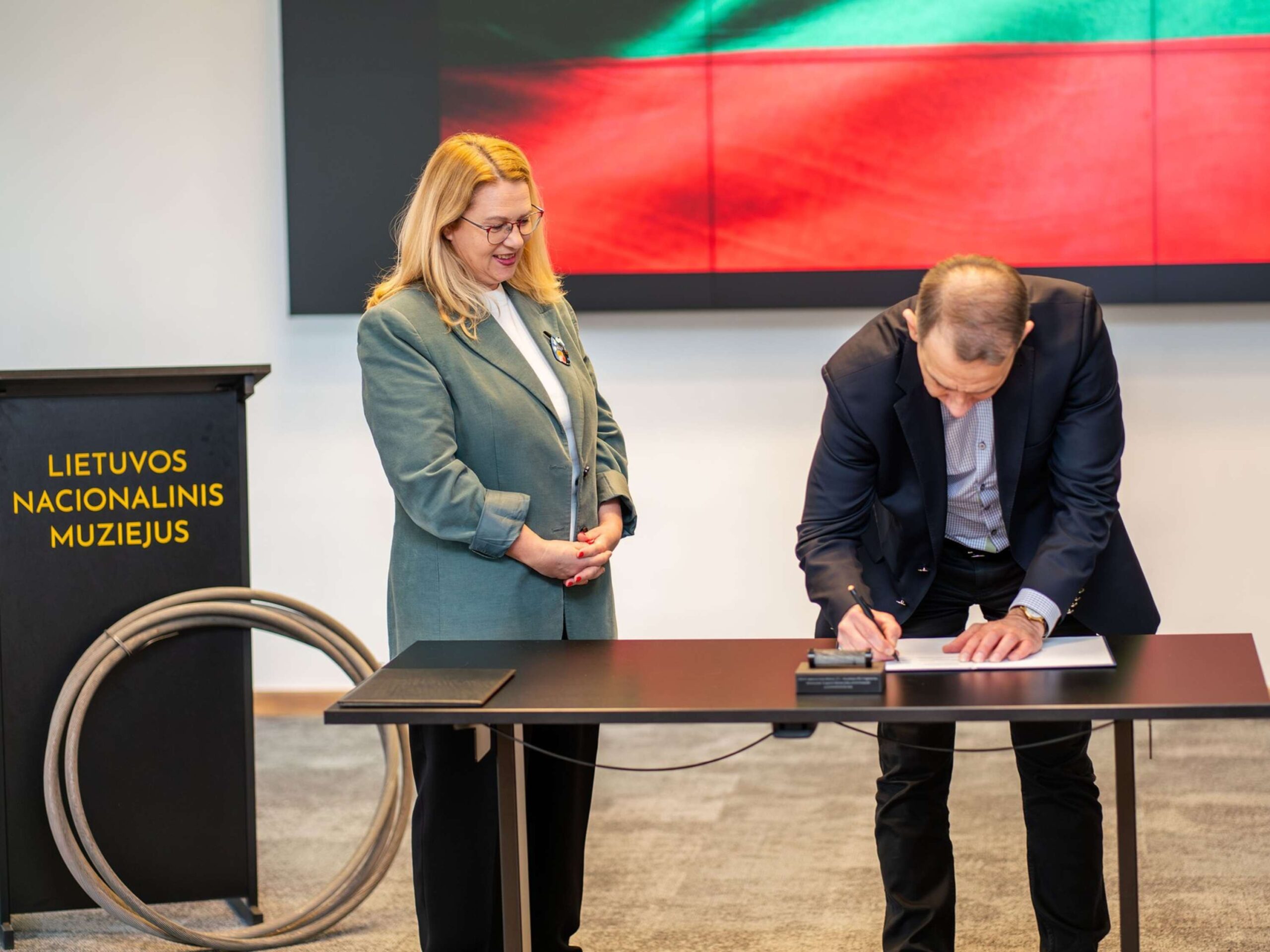
On March 10, 2025, on the eve of Lithuania’s Day of Restoration of Independence, the National Museum of Lithuania received unique artifacts related to the synchronization of the Baltic States’ power grids. These items were donated to the museum by Lithuania’s electricity transmission system operator, Litgrid.
The artifacts – a souvenir box containing a wire fragment and a separate four-meter segment of cable – commemorate a historic event: on February 8 of this year, Lithuania, Latvia, and Estonia disconnected from the Russian-controlled electricity system, and on February 9, synchronized with the continental European power grid. This marks the most significant project for the Baltic States’ energy security since the restoration of their independence.
Symbols of Our Time
The transfer of these items to the museum on this particular date carries special meaning. On the eve of March 11, as Lithuania celebrates the 35th anniversary of the restoration of its independence, these symbols serve as a reminder that freedom is not only about historical events but also about the continuous effort to ensure national security and self-reliance. The disconnection of the Baltic States from the post-Soviet power system and synchronization with Western Europe is one of the latest steps in affirming Lithuania’s sovereignty.
“Historical turning points are marked not only by documents and political agreements, but also by physical objects that become symbols of their time. The mission of the National Museum of Lithuania is to preserve such evidence for future generations. These exhibits will serve as a reminder of the Baltic States’ determination to achieve energy independence and the decades-long preparation for synchronization with Western Europe.”

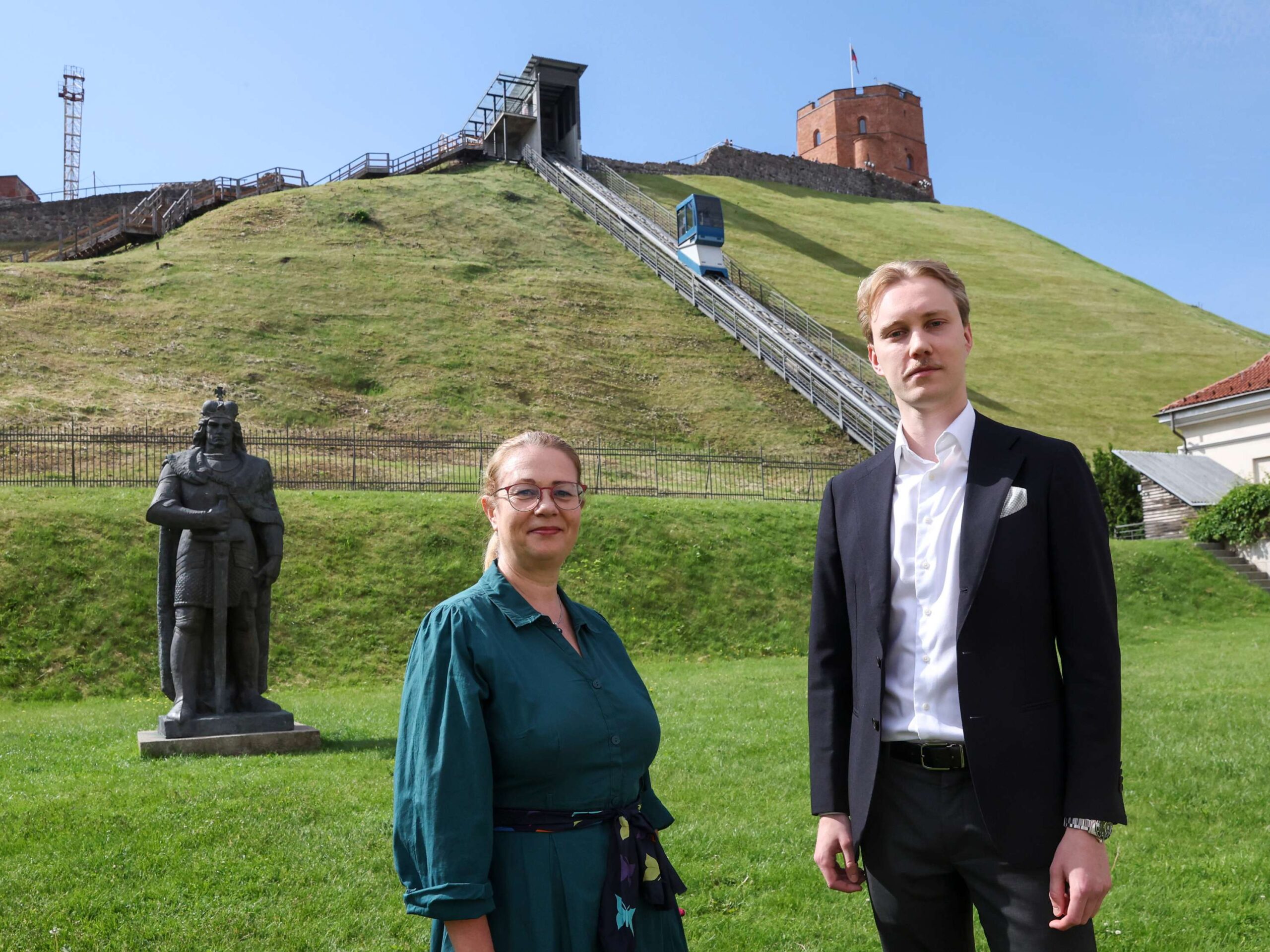
“The museum’s decision to acquire these artifacts is especially important in light of today’s complex geopolitical situation. Once again, we want to reaffirm that we are free and independent,” said Rūta Kačkutė, Director General of the National Museum of Lithuania.
“Synchronization with continental Europe is the most significant achievement in the history of the Baltic States’ energy independence. It crowns the long-standing efforts of energy professionals in Lithuania, Latvia, and Estonia, as well as their close cooperation with European partners. For a month now, we have been full participants in Europe’s electricity infrastructure. We are currently dismantling outdated electricity transmission lines with Russia and Belarus, which are no longer needed. Some of the equipment from these lines is being sent to Ukraine, where it will contribute to the restoration of the energy infrastructure being destroyed by Russia. The wires handed over today will become symbols of our energy independence,” said Rokas Masiulis, CEO of Litgrid.
The souvenir fragment of the electrical wire presented to the museum is mounted on a wooden base inscribed with: “Baltic Energy Independence 2025.” The set also includes a separate four-meter-long cable segment, symbolizing the abandonment of the post-Soviet energy system. These wires are parts of dismantled 330 kV transmission lines: Bitėnai–Sovetsk (Russia) and Vilnius–Maladzyechna (Belarus).
These items will become part of the National Museum of Lithuania’s collections, telling the story of the country’s energy shift and path toward energy independence.
How Are Exhibits Selected?
The National Museum of Lithuania continually expands its collections, including not only historical but also contemporary testimonies that reflect the development of society, the state, and culture.
“When selecting exhibits, the most important criteria are their historical, cultural, and symbolic significance. What do they tell us about the era? How do they reflect societal values, ideas, and changes? Our goal is to document not only past events but also vivid moments from today’s history that will serve as important testimonies in the future. The symbols of the Baltic States’ power grid synchronization are exactly that – they mark a significant geopolitical shift that will shape Lithuania’s future,” emphasized Rūta Kačkutė.
The National Museum of Lithuania preserves over one and a half million artifacts and unites twelve branches that present the most important events in Lithuania’s history to the public.
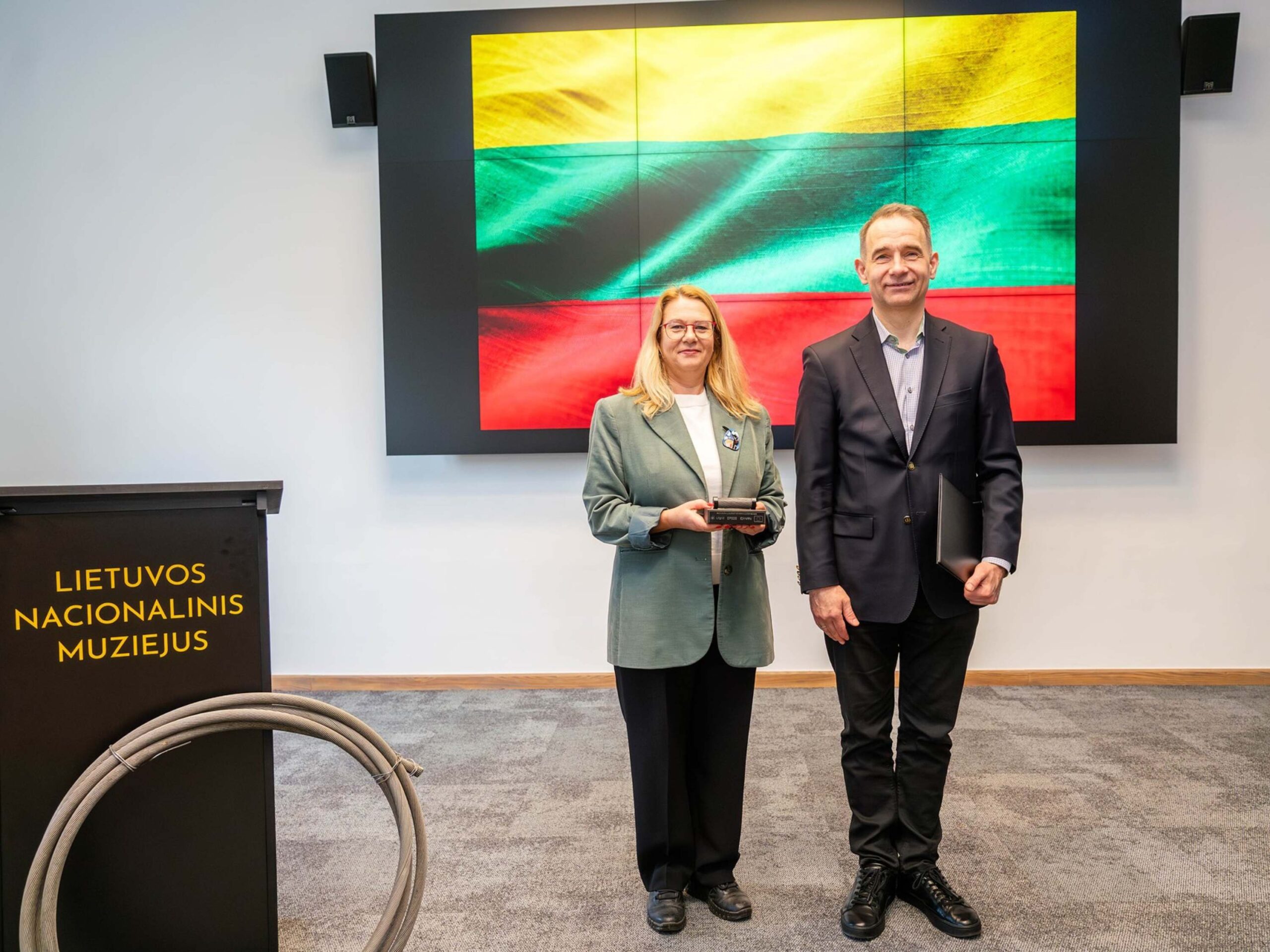

Photo by: Silvestras Samsonas LNM