“How peaceful your sky is”: Ukrainian specialists will remember their stay in Lithuania for a long time
2025 12 02
Internships for Ukrainian restorers with colleagues in Lithuania – meaningful support for a country under attack. Solidarity, cooperation, and responsibility for cultural heritage connect nations even during war: the Restoration Centre of the Lithuanian National Museum (LNM) welcomed Ukrainian restorers who worked alongside Lithuanian specialists, deepened their knowledge of cultural heritage preservation, exchanged experience, and strengthened professional ties.
In June 2024, UNESCO and international partners in Vilnius committed to implementing Ukraine’s cultural sector recovery plan, which consists of six priority areas. One of them is restoration: preventive and emergency measures, reconstruction, and cultural heritage recovery. The Lithuanian Government announced a traineeship programme titled “Professional Development of Employees of Ukrainian Cultural Institutions in Lithuania.” Specialists from the war-torn country began their internships in Lithuanian museums, libraries, and the Film Centre.
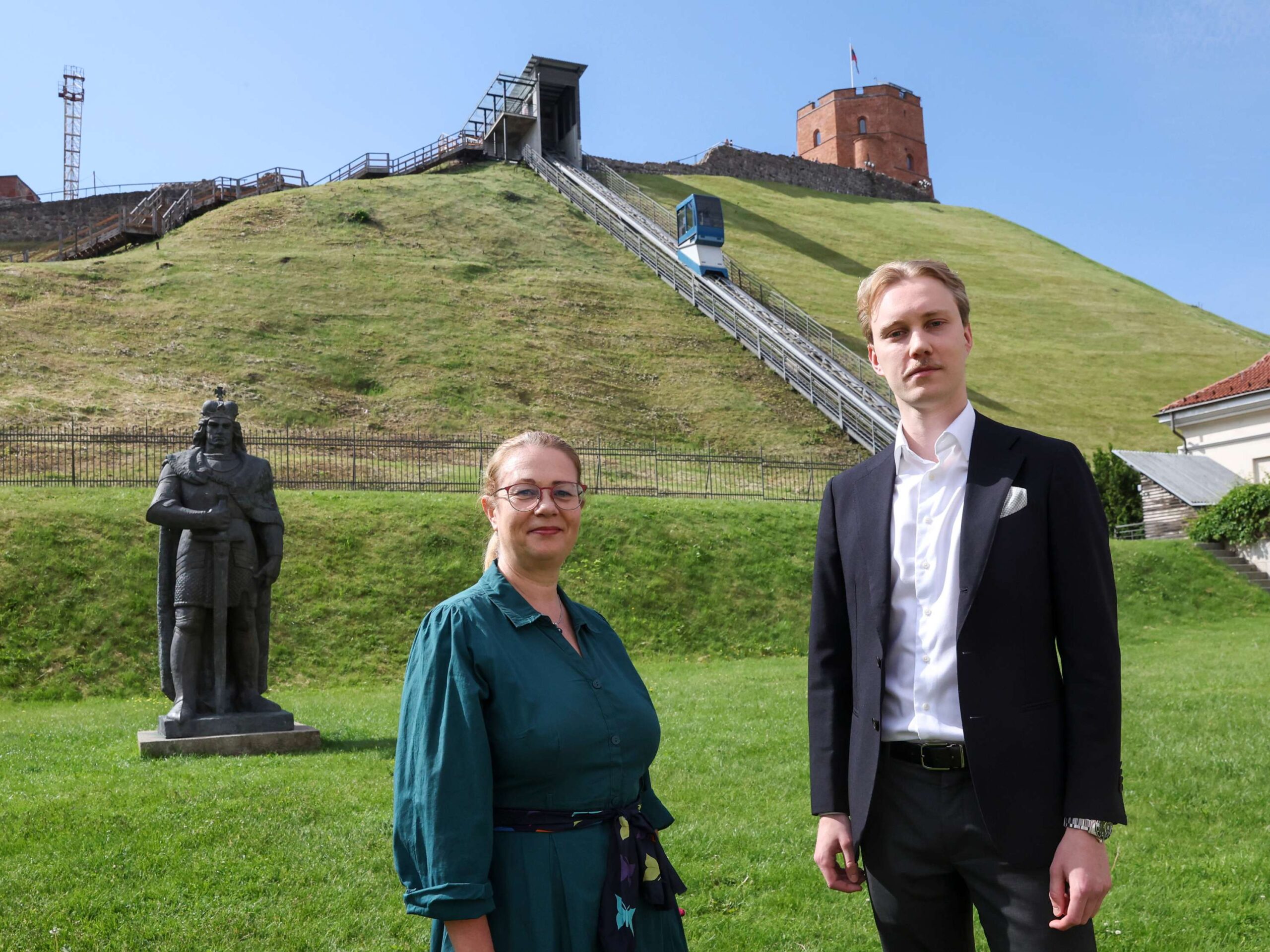
“This is a very meaningful programme, and it would be important to continue it,” says Eglė Odinienė, head of the LNM Restoration Centre and a ceramics restorer. “It works differently from the forms of aid we usually provide to Ukraine – it highlights the work of professional specialists: the Ukrainians could pull away, even briefly, from their tense daily reality and work for a week as experts in their field, finding some rest from constant pressure. The first words they said when they arrived were: ‘How peaceful your sky is!’ It was truly very moving.”
-
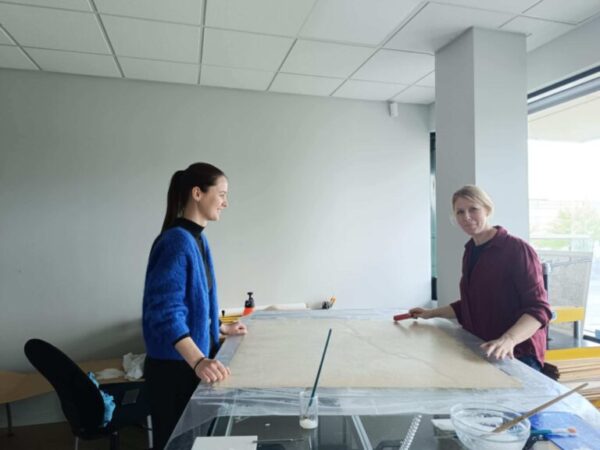
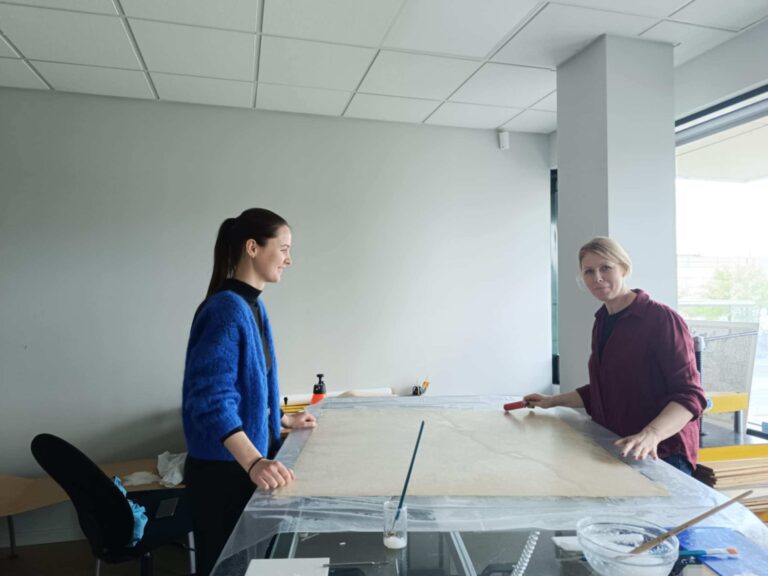
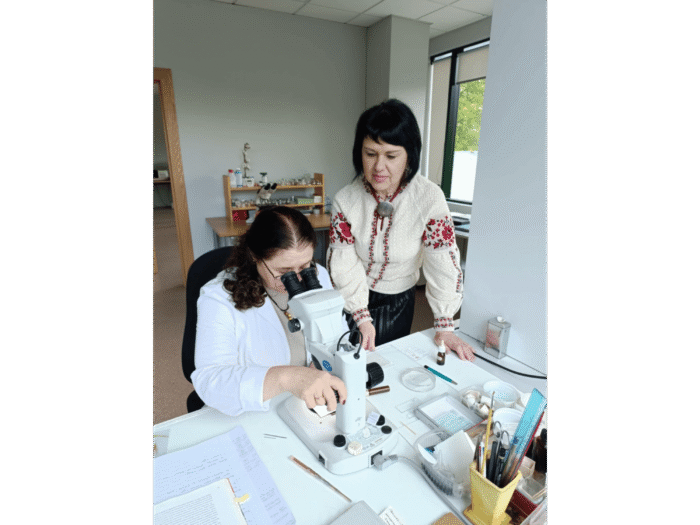
- Valeriia Leonenko, a document restorer from the National Museum of the History of Ukraine, during her internship in the Document Restoration Workshop, working together with restorer Lina Kregždienė.
When day X comes
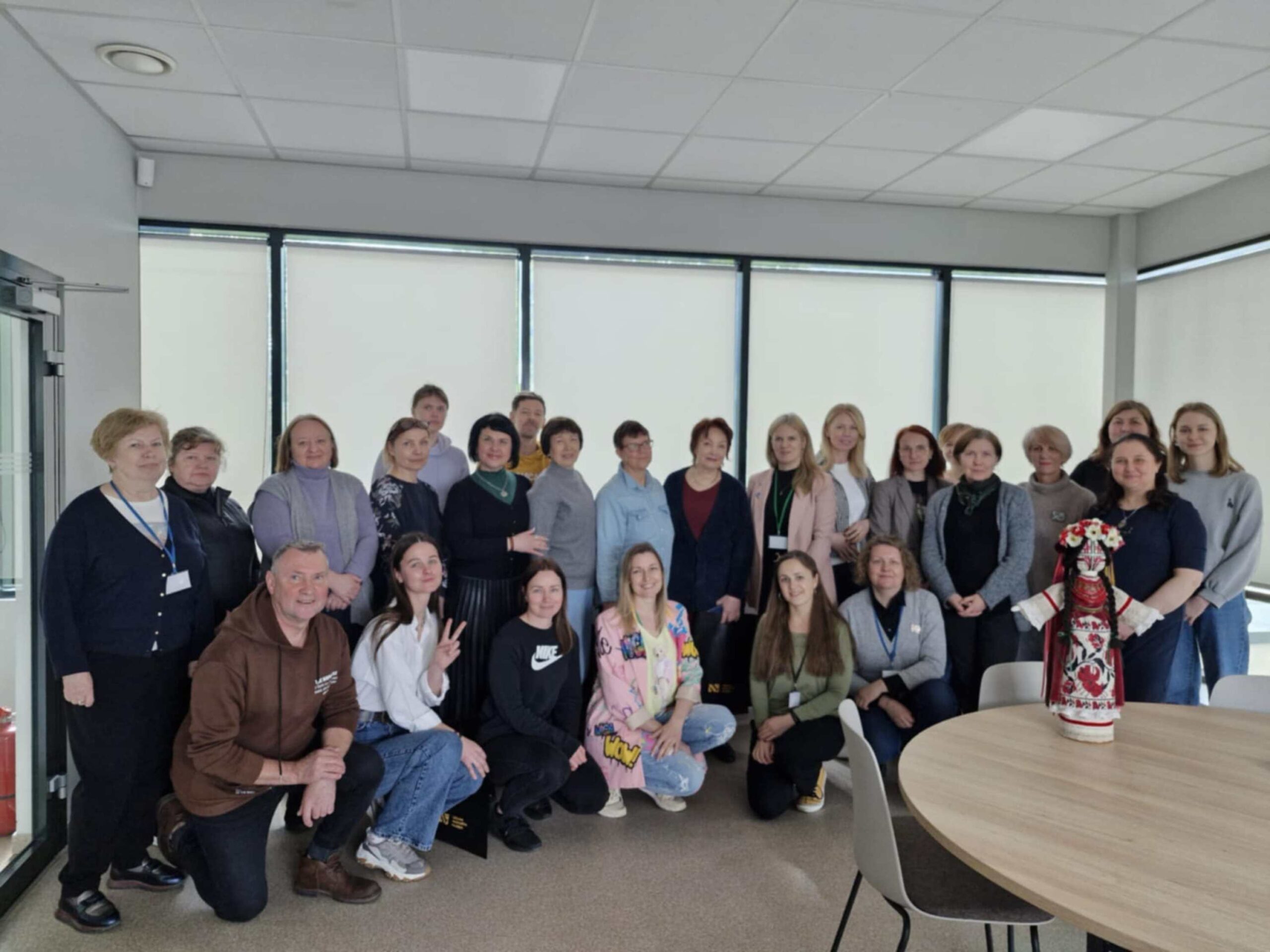
Odinienė told LRT.lt that in 2025 her institution hosted seven Ukrainian restorers from two national institutions in Ukraine: in spring, six specialists from the National Museum of the History of Ukraine visited, and in autumn, restorer Irina Rosenberg from the Institute of Archaeology of the National Academy of Sciences of Ukraine.
According to the head of the Restoration Centre, it was not easy for them to leave Ukraine. It was somewhat easier for women, while men had to sign a commitment to return. Museum directors there had to overcome many restrictions.
The visitors, she said, trained in almost every area of restoration – ceramics, metal, archaeological artefacts, textiles, painting, and documents. They also consulted the research laboratory’s specialists on important questions.
“They arrived knowing exactly what they wanted. They brought materials relevant to their work – items they planned to restore soon back home. Together, we looked for solutions. We were very useful to them,” Odinienė emphasizes.
For example, due to the war, it is difficult for Ukrainians to obtain packing materials and textile-washing agents. Lithuanians helped their colleagues find ways to acquire and transport them home more easily. The cooperation continues even now, with specialists consulting remotely.
Expert advice from Ukrainians – who face air-raid alerts in their cities every day – was also very valuable to the LNM restoration staff. They shared, for example, how to properly carry out preventive work on exhibits when day X arrives. According to them, the most important thing is to have an evacuation plan for valuables, set priorities, and keep exhibits packed and ready for transport and storage.
A race against time
According to Renata Prielgauskienė, head of the Research Division of the LNM Restoration Centre, their colleagues from Ukraine face insufficient funding and a lack of chemical technologists who can analyse what materials were used in an artefact. Such information is essential for choosing the correct restoration methodology.
The Ukrainians could not bring the artefacts they needed to restore, as they are not authorised to transport museum valuables out of the country. Therefore, during the internship they worked with Lithuanian analogues, learned processes less familiar to them, and tested materials and methods used in Lithuania. After returning home, they can now apply this knowledge to original artefacts.
-
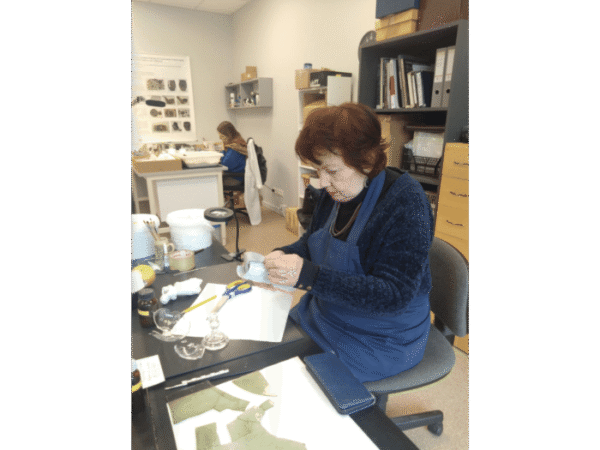
- Nataliia Revenok, a ceramics restorer from the National History Museum of Ukraine, during her internship at the ceramics restoration workshop.
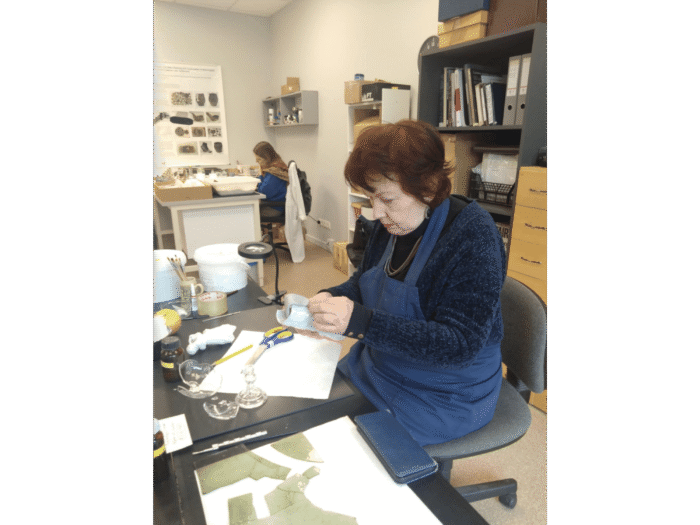
Ukrainians brought only small samples – tiny fragments such as threads from a church banner, metallised threads, and 15 tiny pieces of an Orthodox cross.
According to Prielgauskienė, these internships are held for a reason – they are a necessity: “It’s a race against time; some artefacts need to be restored immediately. In wartime conditions, this is much harder to do. Delays can mean losing a museum object forever.”
“I was happy for them myself”
Viktorija Grigienė, a restorer in the Archaeological Metal Artefacts Restoration Division, worked with two Ukrainian specialists – Jurij But and Olha Voronova. She was most struck by the fact that Ukrainians had never used chloride-removal methods for metal artefacts.
“For us, this is one of the key processes in conserving metal finds! Active chlorides corrode metal from the inside. If they are not removed, the corrosion sources remain. Iron is especially vulnerable,” she explains.
This “discovery” made a strong impression on the guests as well – especially when they learned that properly treated metal does not corrode for up to 10 years. “They became incredibly interested and fascinated by this process. When leaving, they were determined to purchase all the necessary equipment, chemicals, and tools so they could apply our method. I was truly happy for them,” says Grigienė.
Rasa Nazarovaitė, a restorer in the LNM Ceramics and Metal Artefacts Restoration Division, worked in spring with Dr. Natalia Revenok, a ceramics restorer and lecturer from the National Museum of the History of Ukraine, and in autumn with Irina Rosenberg. Both specialists were interested in porcelain and glass restoration. According to Nazarovaitė, slightly different materials are used in Ukraine for porcelain restoration. Rosenberg was also impressed by a tour of the Pranas Gudynas Restoration Centre of the Lithuanian National Museum of Art, where a unique, impressive, and technically complex Venetian glass chandelier is being restored.
-
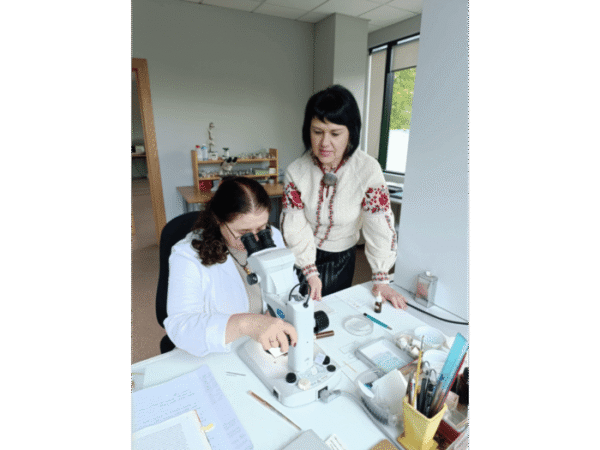
- Olena Gavryliuk, Deputy Director General for Restoration and Museology of the National History Museum of Ukraine, restorer of textile works, during her internship at the Research Laboratory of the LNM Restoration Center together with the head of this department, Renata Prielgauskiene.
Source: LRT.lt, Mindaugas Klusas