The Kudirkos Naumiestis Experiment: Can a Museum Replace a Bookstore?
2025 05 06
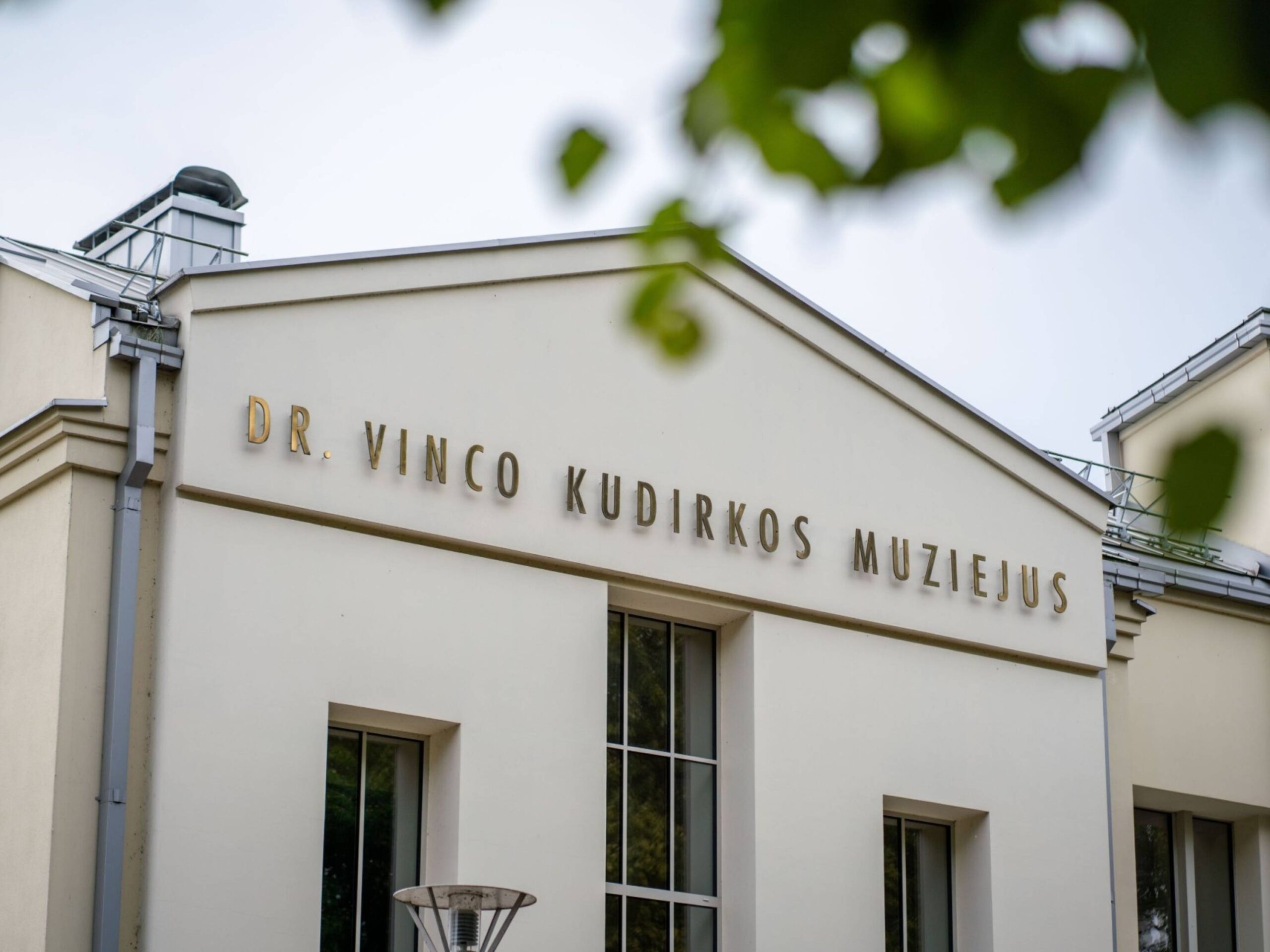
In Kudirkos Naumiestis, a small border town in southwestern Lithuania, there stands a house marked with a commemorative plaque: in 1904, book smuggler Antanas Baltrušaitis opened one of the first legal bookstores in Lithuania. Yet today, the same region no longer has a single functioning bookstore. This inspired the Vincas Kudirka Museum, a branch of the National Museum of Lithuania, to launch a bold experiment: bringing a bookstore back to a town whose historical identity is rooted in the fight for the Lithuanian word, press freedom, and the right to read and speak in Lithuanian.
The Day of the Restoration of the Press, Language, and Book is an ideal occasion to reflect on why printed books are disappearing from public spaces—and how cultural institutions can act as modern-day book smugglers.
No Bookstore – No Cultural Lifeblood
In recent years, dozens of independent and chain bookstores have vanished from Lithuanian towns, leaving books to be sold mainly on supermarket shelves or online platforms. A few years ago, the last bookstore in Šakiai closed its doors, marking another cultural loss for the region.
According to Dr. Rūta Kačkutė, Director General of the Lithuanian National Museum, museums cannot remain passive in the face of this trend: “A bookstore, like a museum, is a cultural artery—quietly keeping the organism alive. When that artery is blocked, the cultural circulation of the local community begins to freeze.” She adds that a bookstore is more than a retail outlet—it is a place for encounters, discoveries, and personal connection with texts.
The Lithuanian Publishers Association has also sounded the alarm for some time, warning that the disappearance of bookstores in the regions is irrevocably changing the culture of reading.
“In many regions—especially those with low population density and difficult economic conditions—losing a physical bookstore cannot be fully replaced by alternatives. While online stores offer a wide selection, they require digital literacy, which often poses challenges for elderly people and those experiencing social exclusion. During the pandemic, it became clear that online book sales are not enough. The virtual space cannot substitute for physical contact with a book, author, or reading community. A book is also a tangible object, something to **touch, flip through, or gift,” says Dovilė Zaidė, President of the Lithuanian Publishers Association.
Against this backdrop, the Vincas Kudirka Museum’s decision to not only expand its book offerings, but also become a living hub of book culture, takes on special significance. It demonstrates that cultural institutions can—and must—respond to important local community needs.
Book Smugglers Founded the Bookstore – The Museum Restores It
Kudirkos Naumiestis is no coincidence—it is historically a birthplace of book smuggling in Lithuania.
In the 19th century, the town was a central point of this cultural resistance movement.
Here, the most active distributor of banned press, Antanas Baltrušaitis–Antanėlis, led the distribution network across Suvalkija. His small bookstore became an epicenter of cultural resistance.
“The bookstore founded here in 1904 by book smuggler Antanas Baltrušaitis survived every upheaval of the 20th century and remained a beacon of light for the community. Now, over a century later, its spirit seems to return— The Vincas Kudirka Museum, operating beside the former Baltrušaitis bookstore, once again becomes a refuge for books,” says Vida Palionienė, Head of the Vincas Kudirka Museum.
-
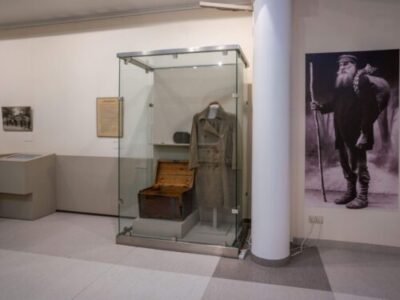
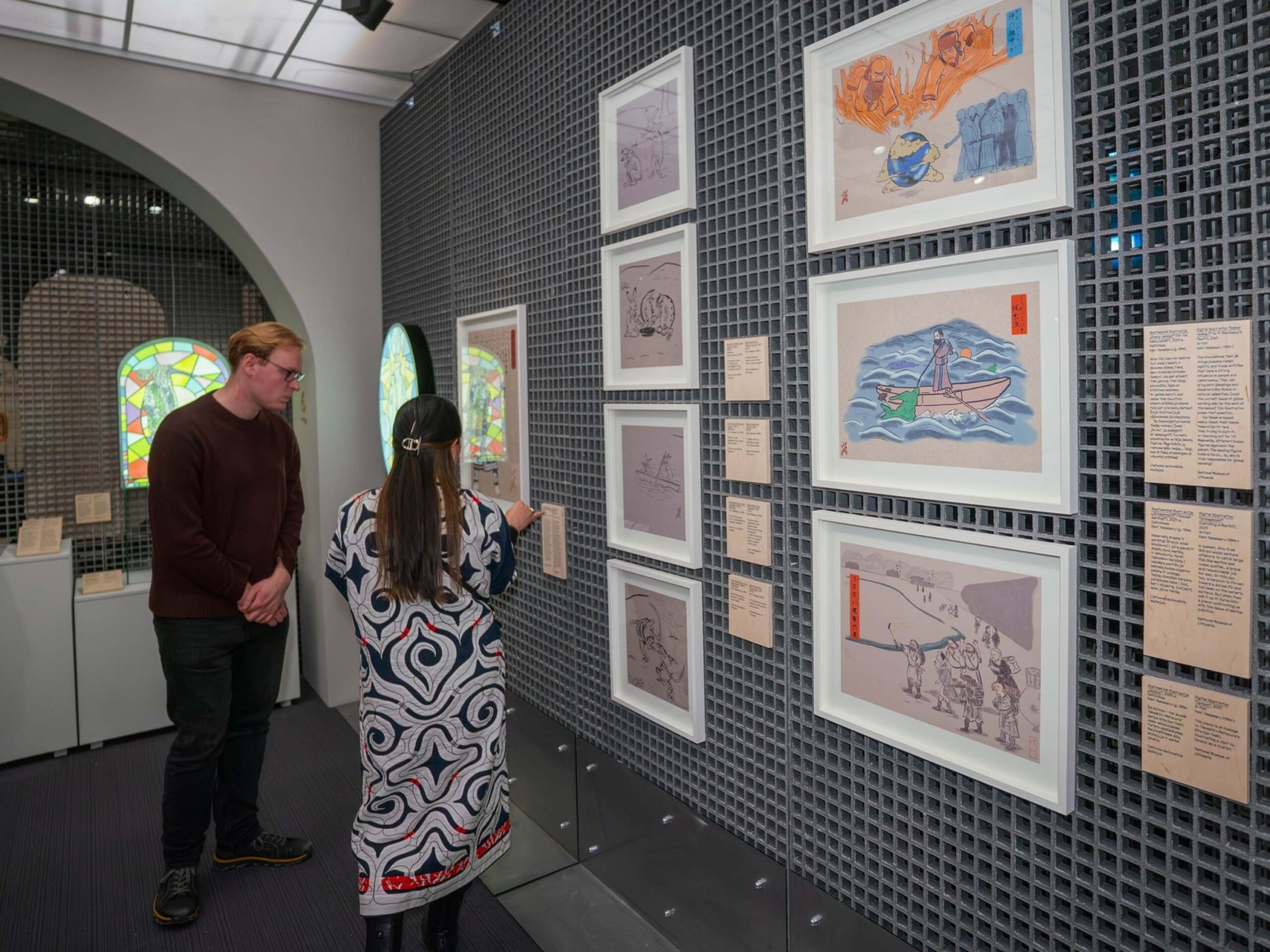
- Kudirkos Naumiestis – the cradle of book smuggling, as told by the exhibition at the Vincas Kudirka Museum. Photo by Silvestras Samsonas, LNM
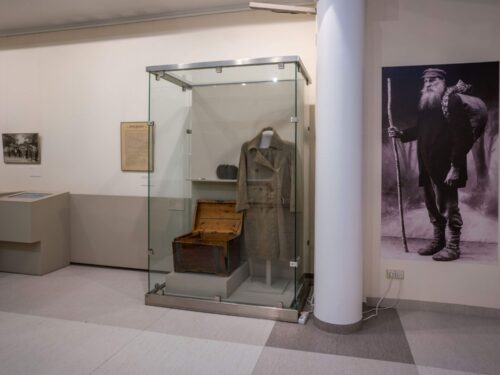
-
- Kudirkos Naumiestis – the cradle of book smuggling, as told by the exhibition at the Vincas Kudirka Museum. Photo by Silvestras Samsonas, LNM
Signing under pseudonyms like Antanėlis, Mindaugas, or Zigmantinis, Antanas Baltrušaitis personally transported manuscripts to Širvinta, sent correspondence to editorial offices, studied bookbinding, and distributed printed materials in the major cities of the Russian Empire.
“Baltrušaitis’ life story is no less compelling than the plot of a good novel. Limping since childhood and saved from death at the age of just 35, he defied physical hardship and life-threatening circumstances. His work resembled a secret cultural logistics network, with Naumiestis at its epicenter: women transported press materials by carriage, the wives of officials helped, even a court secretary took part,” says Aurimas Kanapkis, educator at the Vincas Kudirka Museum.
A Small Museum – Big Changes
On the eve of the Day of the Restoration of the Press, Language, and Book, the Vincas Kudirka Museum launches a new initiative: the creation of a space for meetings and book purchases. This could become a pilot model for how a museum can take on some functions traditionally associated with a bookstore. But the most important change lies not in infrastructure—but in mindset. The museum is understood here as a living part of the community, capable of responding to social and cultural shifts.
“When there’s no place to buy a book or speak to someone who can recommend one, even the best digital platform can’t replace the value of real human connection. This museum initiative is inseparable from the broader context of regional cultural policy.
The Vincas Kudirka Museum not only preserves history—it brings it to life to meet the needs of today,”
says Dr. Rūta Kačkutė, Director General of the National Museum of Lithuania. She emphasizes that museums—especially in the regions—must boldly take on broader cultural roles: “Although museums are often perceived as retrospective institutions, they can provide very contemporary answers to today’s questions.”
This is not just a local solution, but also a signal to national cultural policy: small museums have the potential to be powerful agents of change.
A Bookstore in the Museum: An Invitation to Publishers and Readers
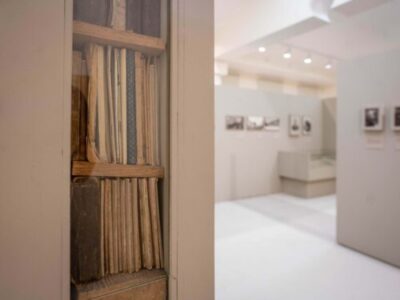
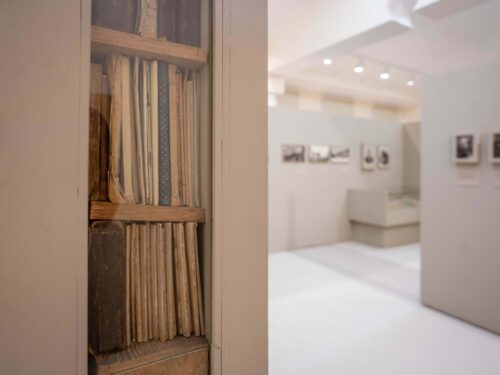
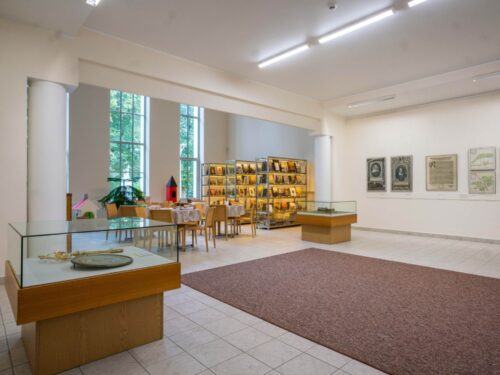
At the Vincas Kudirka Museum, visitors can now purchase over 100 publications from the National Museum of Lithuania (you can browse the selection in the [online store – click here]). The collection is being expanded with books from other publishers, including Alma littera, Misteris Pinkmanas, Odilė, Baltos lankos, 700 eilučių, and Žalias kalnas.
“If the idea proves successful, we’ll offer an even broader variety of books. For now, we’ve focused on popular history books for adults, as well as books for teenagers and children. That’s important for this region in particular, as older visitors often want to buy books for their visiting grandchildren,” says Vida Palionienė, Head of the Vincas Kudirka Museum.
According to her, the museum is actively inviting publishers to collaborate, helping to strengthen the physical bond with books and creating a lively space for cultural encounters in the region:“ We encourage publishers to get in touch if they’d like to showcase their books or host meet-the-author events. With the town’s historical background and current significance—Kudirkos Naumiestis is one of Lithuania’s 2025 Small Cultural Capitals—this is a perfect time for such initiatives.”
This year, Kudirkos Naumiestis and the Vincas Kudirka Museum will offer a particularly rich cultural events program. During the warmer months, the museum will host guided tours every Sunday, transporting visitors back to the early 20th-century town. The museum currently features a photography exhibition by Rimaldas Vikšraitis focused on childhood. This summer, the museum will host the exhibition “19490216: The Cipher of Decision.” And in the autumn, the town will welcome the Potato Festival, during which artist Inga Stankaitytė will perform a seven-day piece in the museum’s window, peeling potatoes as a live performance that explores gender stereotypes and social roles.
-
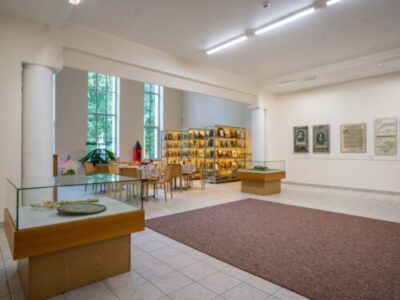
- Bookstore space at the Vincas Kudirka Museum. Photo by Silvestras Samsonas, LNM
-
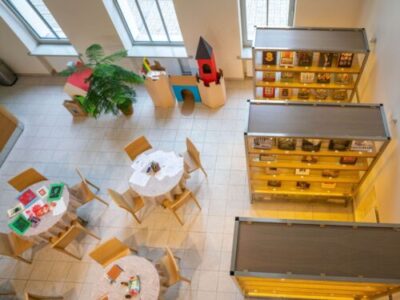
- Bookstore space at the Vincas Kudirka Museum. Photo by Silvestras Samsonas, LNM
-
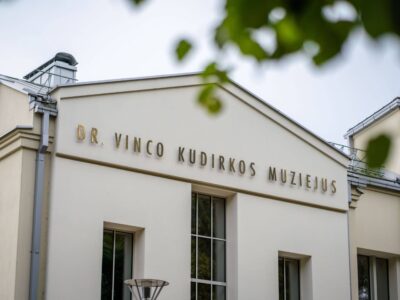
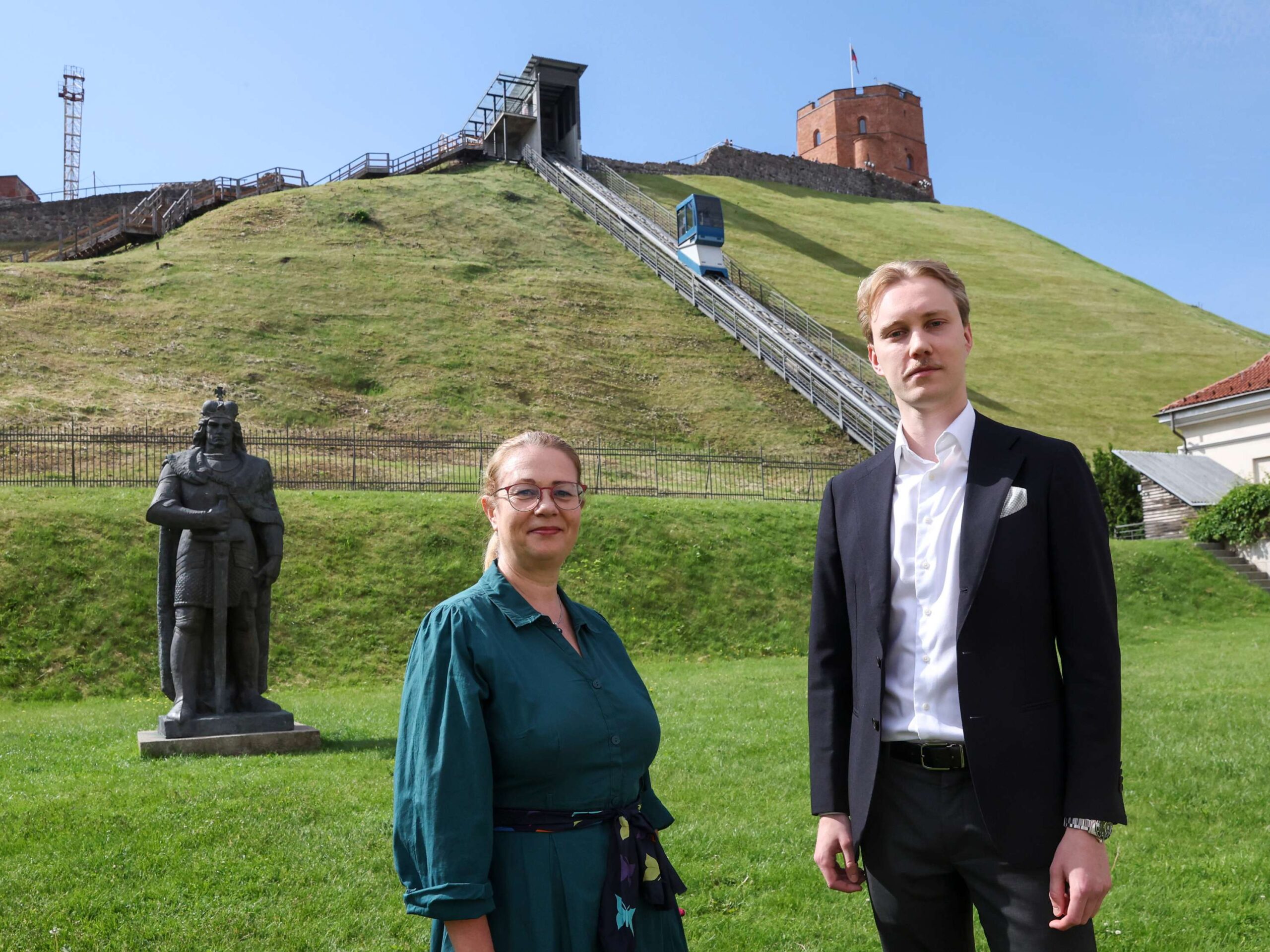
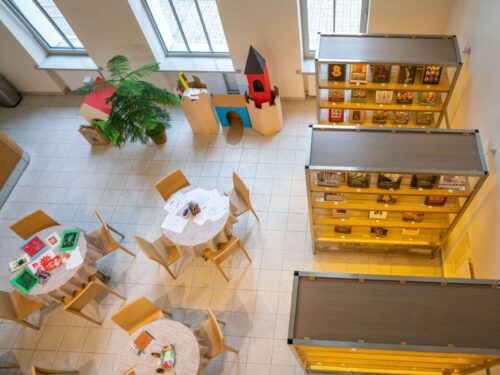
- The Kudirkos Naumiestis experiment: can a museum replace a bookstore? Photo by Silvestras Samsonas, LNM
Information about the Vincas Kudirka Museum: click here