Monika Radžiūnaitė, an artist presenting an exhibition at the Kazys Varnelis House-Museum, is convinced: mistakes foster growth
2024 01 31
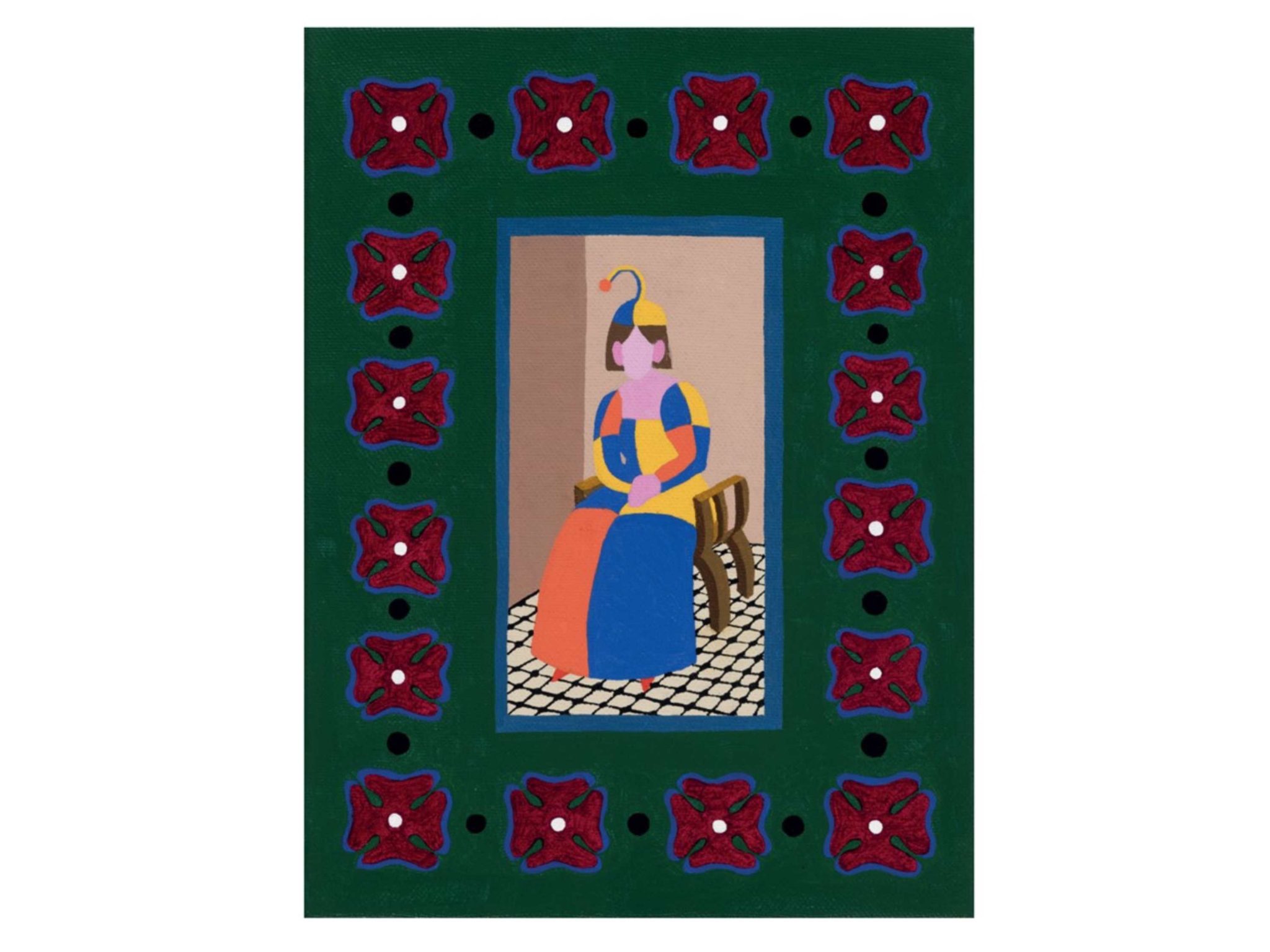
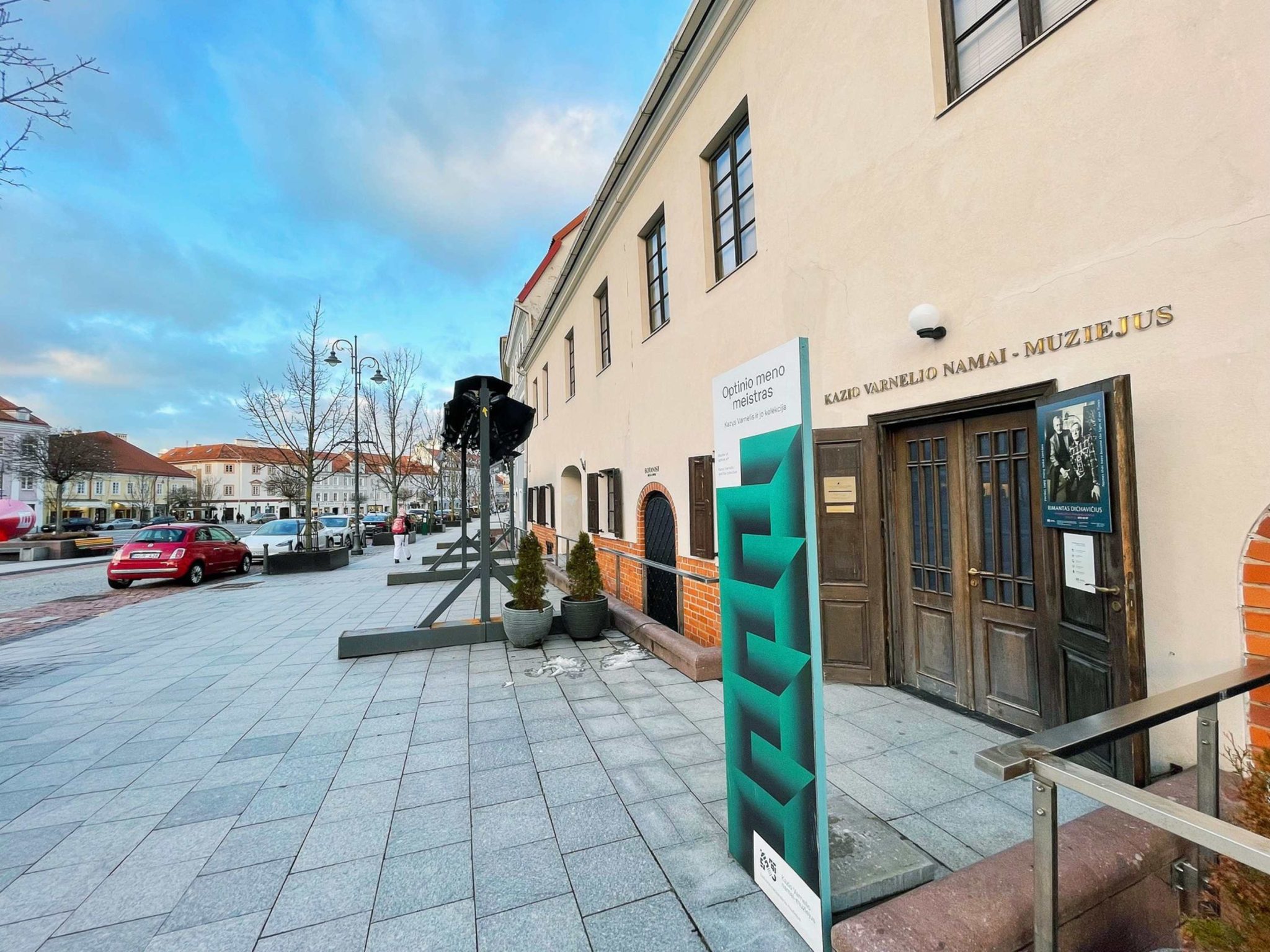
On January 31st, an exhibition by artist Monika Radžiūnaitė titled “And I’m Only Human” will open at the Kazys Varnelis House-Museum. In the historical space of this branch of the Lithuanian National Museum, works inspired by medieval aesthetics and contemporary visual culture will be on display until October 2nd, inviting visitors to explore the phenomenon of mistakes. The exhibition’s author, Monika Radžiūnaitė, and curator, Indrė Urbelytė, discuss the idea of the exhibition, which invites dialogue with the vaults of the Lithuanian National Museum, and how mistakes bring new meanings to life and creativity.
– Monika, Indrė, let’s start with the fact that the exhibition is taking place at the Kazys Varnelis House-Museum. How does this space and the artist’s work extend the idea of the exhibition, perhaps even becoming part of it?
I.U.: Almost two years ago, I invited Monika to explore the museum’s permanent exhibition, thinking about the connections between the transformed medieval aesthetics in her work and the history of the museum’s buildings. Our walls, where the life of the Small Guild was actively buzzing six centuries ago, are among the oldest in Vilnius, and the exhibitions feature artifacts from different epochs and regions. Similarly, in Monika’s work, the iconography of different times and cultural layers intertwines, which we perceive with today’s eyes. Thus, the Gothic vaults of the museum became an important source of inspiration for this exhibition. Of course, later connections with Varnelis’s work emerged—rhythmic ornaments and the creation of spatial illusion using them, influenced by church art. However, these are just additional threads.
– What does the title of the exhibition, “And I’m Only Human,” mean? What does it suggest, what questions and themes does it encourage us to consider? How relevant is it in today’s world?
I.U.: It’s a rare case when the title of an exhibition illuminates quickly, clearly, and vividly. We borrowed it from one of Monika’s paintings—”And I’m Just an Animal.” The title refers to mistakes, imperfections, inevitable even in the age of technology, in the network of humanity. In simple terms, our world, which was promised salvation by the light of knowledge and perfection brought by the digital world, is full of disruptions and misunderstandings, and each of us sometimes “muffs it” (doesn’t say it right, hears it wrong), and those “sins” linger in digital archives for ages. It’s about human error and the overly serious attitude towards oneself and others.
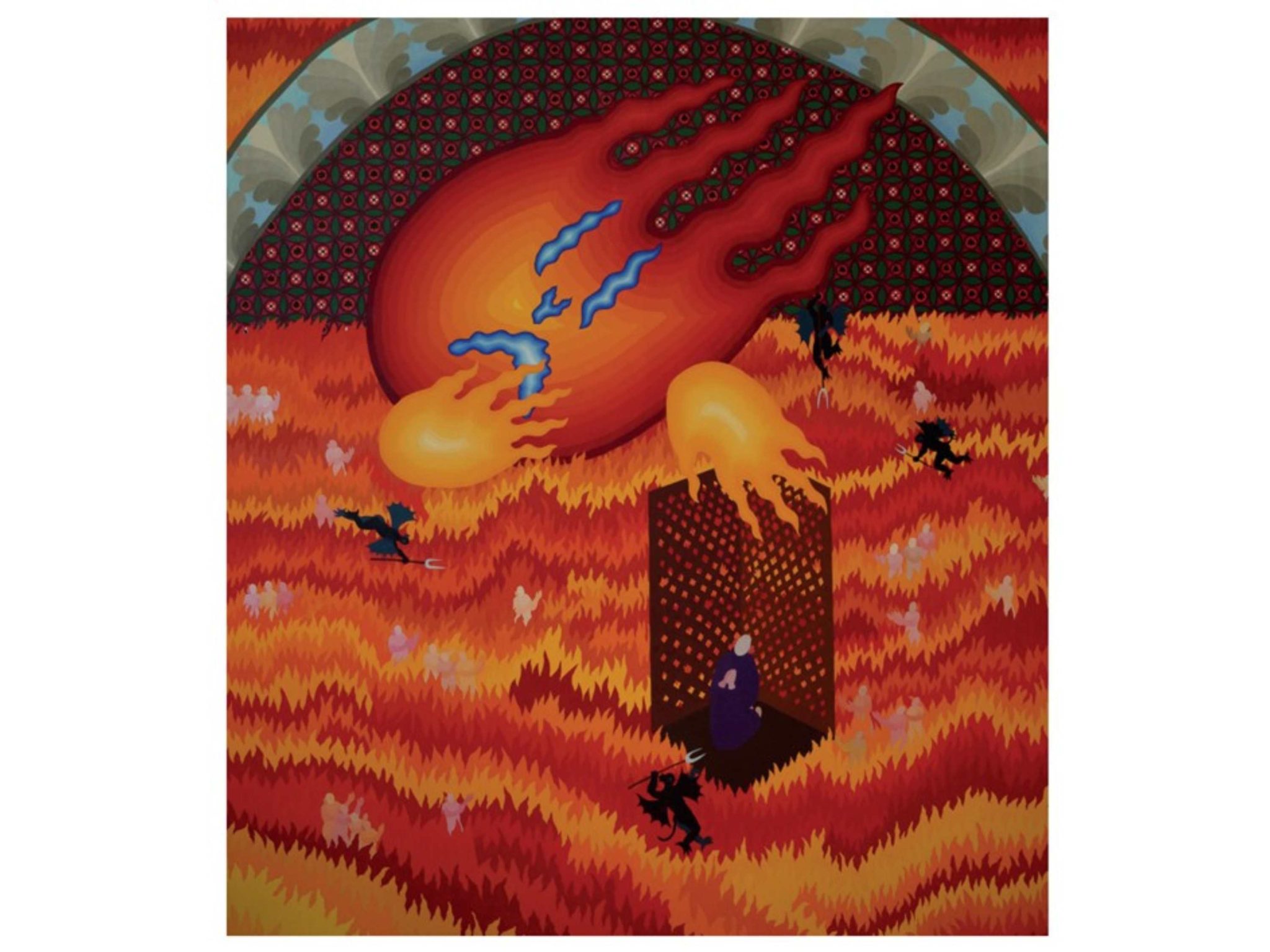
M.R.: The title of the exhibition reflects and summarizes the essence of all the works exhibited. These are worn-out phrases justifying mistakes, as well as comments and proverbs teaching how to live, often faded from the tribunes of visage and justice. In the exhibition, I pose the question of what kind of religion could emerge from today’s visual culture, so the titles of the works are like quotes from new sacred texts.
– Monika, both this exhibition and the one presented a few years ago, “Marvels / Superfluitates,” are somehow related to the Middle Ages and religion. How much do eternal, fundamental themes matter to you in your work?
M.R.: Although Antiquity laid the foundation for medieval thought and culture, it can still be argued that the Christian Middle Ages, steeped in mysticism, miracles, attempts to explain the secrets of the world and humanity, had the greatest influence on the West. Since I am also a product of Western culture, in order to analyze history and make it relevant today, I must delve into the element of religion. I believe that it is impossible to understand our society in any other way.
– You talk about a creative strategy of mistakes. What is it, and how does it manifest in the exhibited works? I’m curious, what do you consider the biggest mistakes in creativity and life?
M.R.: Such a question could be answered with an answer resembling the titles of the works in this exhibition—“why be afraid of what is inevitable.” Mistakes are a common phenomenon in life, encouraging growth.
In a work of art, a mistake is like a second line of interpretation. Using Google Translate, the original Lithuanian title is translated into Latin and back. Due to the still imperfect translation algorithm, new meanings arise, equally capable of speaking. For example, the title of the work “Fortune Sometimes Turns / Interdum fortuna vertit / Sometimes luck turns” testifies not only that luck can turn but also that it constantly changes. Some mistakes in our lives we will never notice.
I.U.: A legendary example of a mistake is the iconography of Moses. Have you ever wondered why there is a horned sculpture of Moses in the niche of Vilnius Cathedral? It is believed that it’s due to a translation error—in Hebrew, the words “to shine” and “horn” are similar, so the “radiant” face of Moses turned into “horned.” Of course, this mistake occurred accidentally, but it led to the appearance of numerous horned images. This is how Monika utilizes the mistake and mistranslation (of images and texts) purposefully to transform recognizable motifs and fill them with today’s meanings.
– You invite visitors to critically reflect on the interaction of text and image. How close is writing, text to you, and how much is it—image?
M.R.: Both image and text seem to me to be equivalent rivals. Text provides an opportunity to delve deeper into meaning, to unlock it in detail, while an image can encompass several meaningful layers in one small plane. Studying, I realized that writing answers the questions I ask myself that I cannot answer visually, and vice versa—so in my creative work, I try to integrate these two elements.
– Thank you for the conversation.
The exhibition at the Kazys Varnelis House-Museum branch of the Lithuanian National Museum will open on January 31st at 6 pm and will run until October 2nd.
Organizer: Lithuanian National Museum
Curator: Indrė Urbelytė
Architect: Gabrielė Černiavskaja
Graphic designer: Monika Radžiūnaitė
Coordinator: Dr. Daiva Vaišnienė
Exhibition partner: Vartai Gallery
Partially funded by the Lithuanian Council for Culture
The Lithuanian National Museum is one of the first museums in Lithuania. Today it houses more than one and a half million exhibits, with about 300 employees working here, and receives about 430,000 visitors annually. LNM unites twelve branches. These are the Gediminas Castle Tower, the Old and New Arsenal, the Castellan’s House, the Defensive Wall Bastion of Vilnius, the House of Histories, the Former Jail, the House of Signatories, the Kazys Varnelis House-Museum, the Birthplace of Jonas Basanavičius, the Museum of Vincas Kudirka.